
Overview
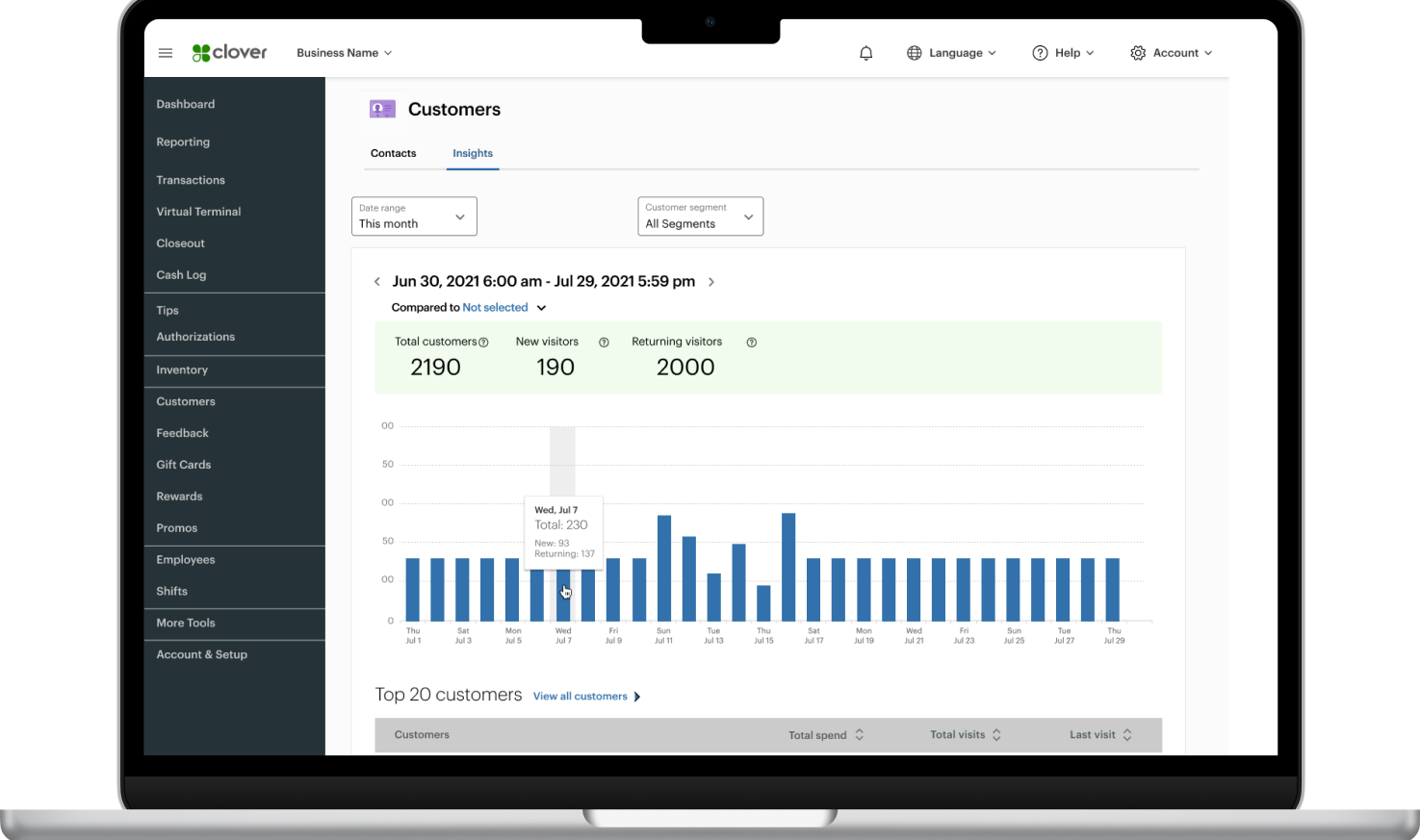
What started as a dashboard scoping project turned into a deeper rethink of how Clover merchants understand and act on their customer relationships. The existing Customers section surfaced data but didn’t help merchants do anything with it; no clear path to engagement, no connection to the loyalty or marketing tools they were already paying for but underusing.
I led design from discovery through handoff, shaping both the product direction and the interaction model for an experience that served merchants across a wide range of technical comfort.
Clover Customers original design
Context
Clover’s merchant base skews toward small business owners who don’t have time for analytics. They need the product to surface the right information at the right moment and make the next action obvious. The Customers section wasn’t doing that. Loyalty, feedback, and messaging tools existed but lived in silos, and engagement with all three was lower than it should have been given the subscriber base.
The ask was a dashboard. The real problem was cohesion.
STAKEHOLDERS
Internal: Product owners of Customers, Marketing, & Loyalty programs.
Users: Merchant managers, Employees, and their Customers.
Discovery
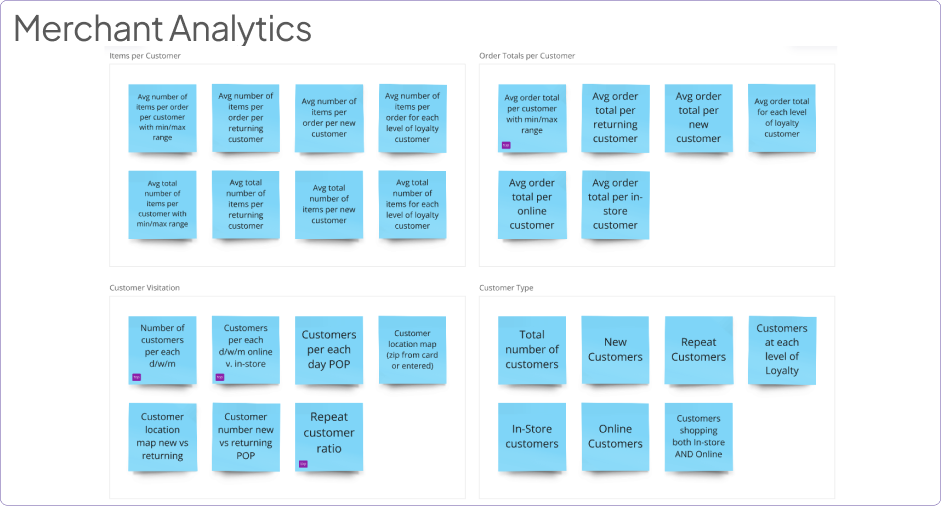
Discovery pulled from multiple streams: support feedback, stakeholder interviews, in-app data, and competitive analysis. But the most useful signal came from listening to how merchants actually talked about their customers. They weren’t thinking in terms of features. They wanted to know who was coming back, who wasn’t, and what to do about it.
That framing became the anchor for how we structured the experience: around actions, not data tables.
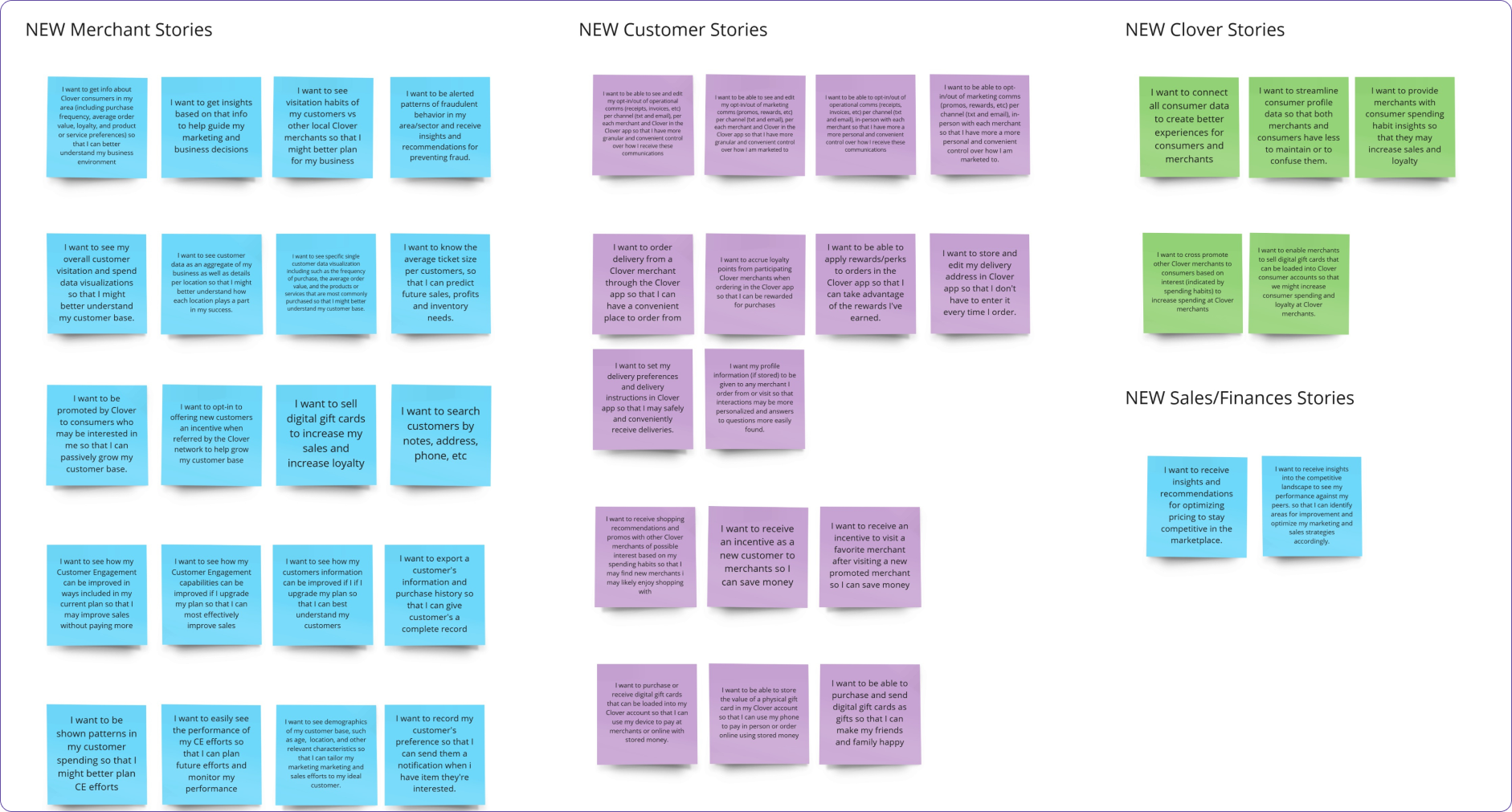
One of the more contentious early decisions was where Customers and Marketing should live in the information architecture. Design and Product had competing instincts. We used AI-assisted IA generation to pressure-test both approaches against user mental models, which helped us reach alignment faster and kept the debate grounded in structure rather than opinion.
Designing With and For AI
Using AI in Research and IA
I used generative AI throughout discovery and IA; not as a shortcut, but as a way to move faster through the parts of the process that don’t require human judgment, so I could spend more time on the parts that do.
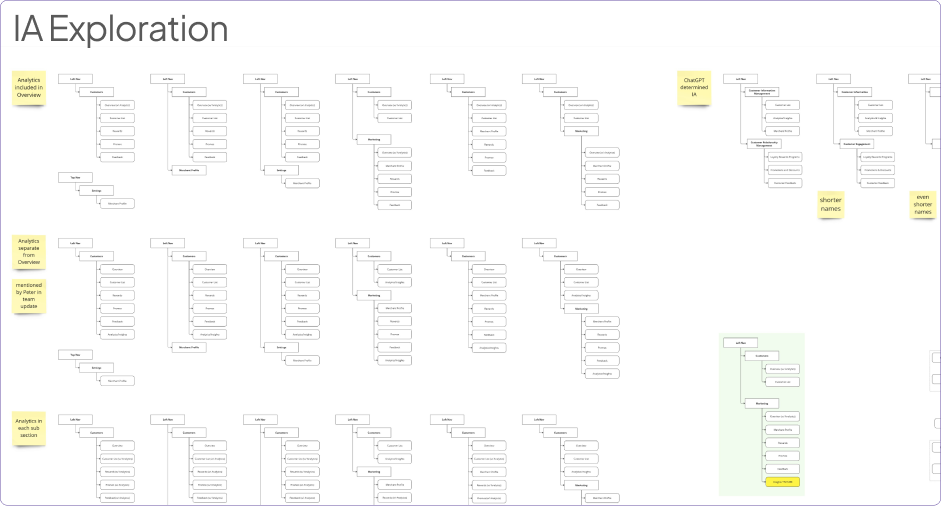
AI-generated IA explorations gave us a broader option space to react to. Prompting the model to think through content differentiation between free and paid tiers surfaced upsell opportunities that hadn’t been part of the original brief. Every output was pressure-tested against real merchant context before it influenced a design decision.
Insights and Analytics
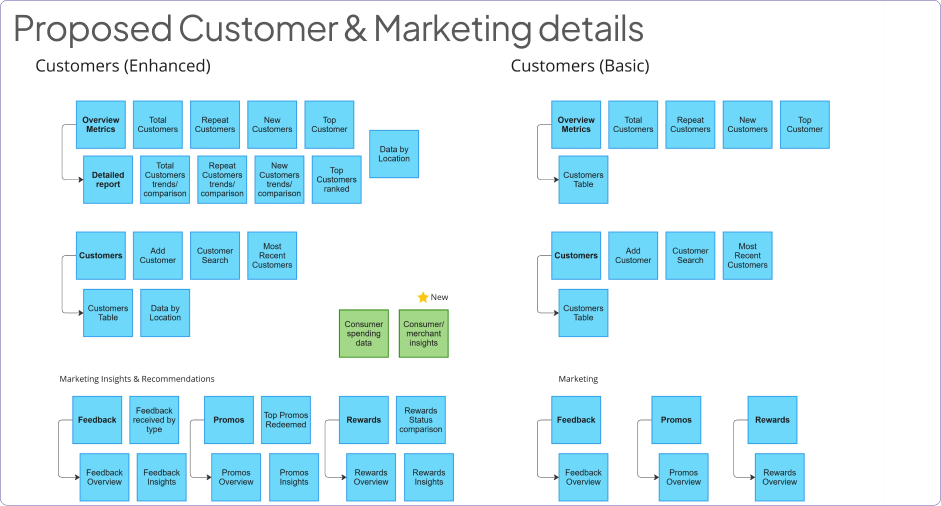
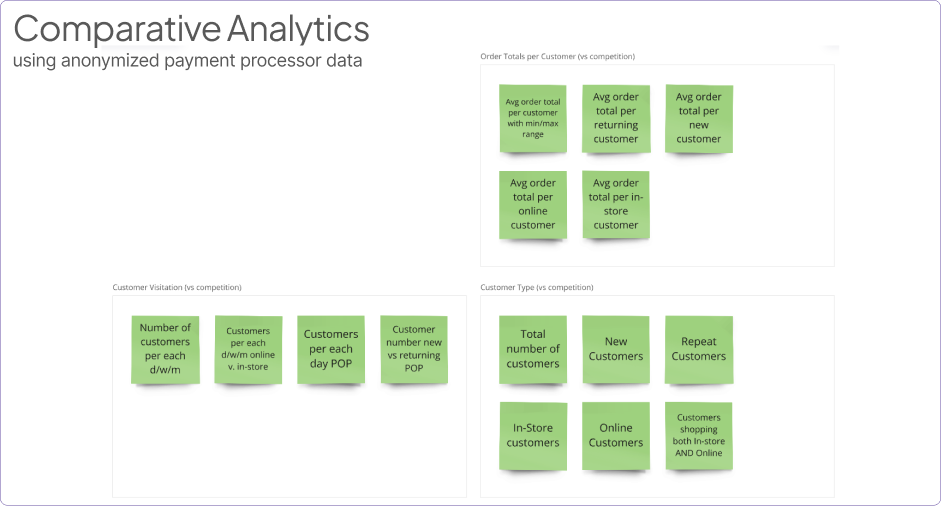
One of the more interesting problems was how to give merchants competitive context without exposing sensitive data. We designed an insights layer that combined merchant-specific performance with anonymized aggregate benchmarks, giving a small business owner a sense of how their foot traffic and conversion trends compared to similar merchants nearby, without surfacing anything proprietary.
This became a meaningful differentiator for the enhanced tier and a concrete reason for merchants to upgrade.
Results & impact
Shifting priorities meant a phased launch. The full dashboard vision didn’t ship in one release, but the loyalty integration went live first and moved the needle quickly.
%
LOYALTY TRANSACTIONS PER MONTH
%
NEW LOYALTY MEMBERS PER MONTH
The broader Customers redesign continued in a staged rollout, with the IA and interaction foundations we established carrying forward into subsequent releases.
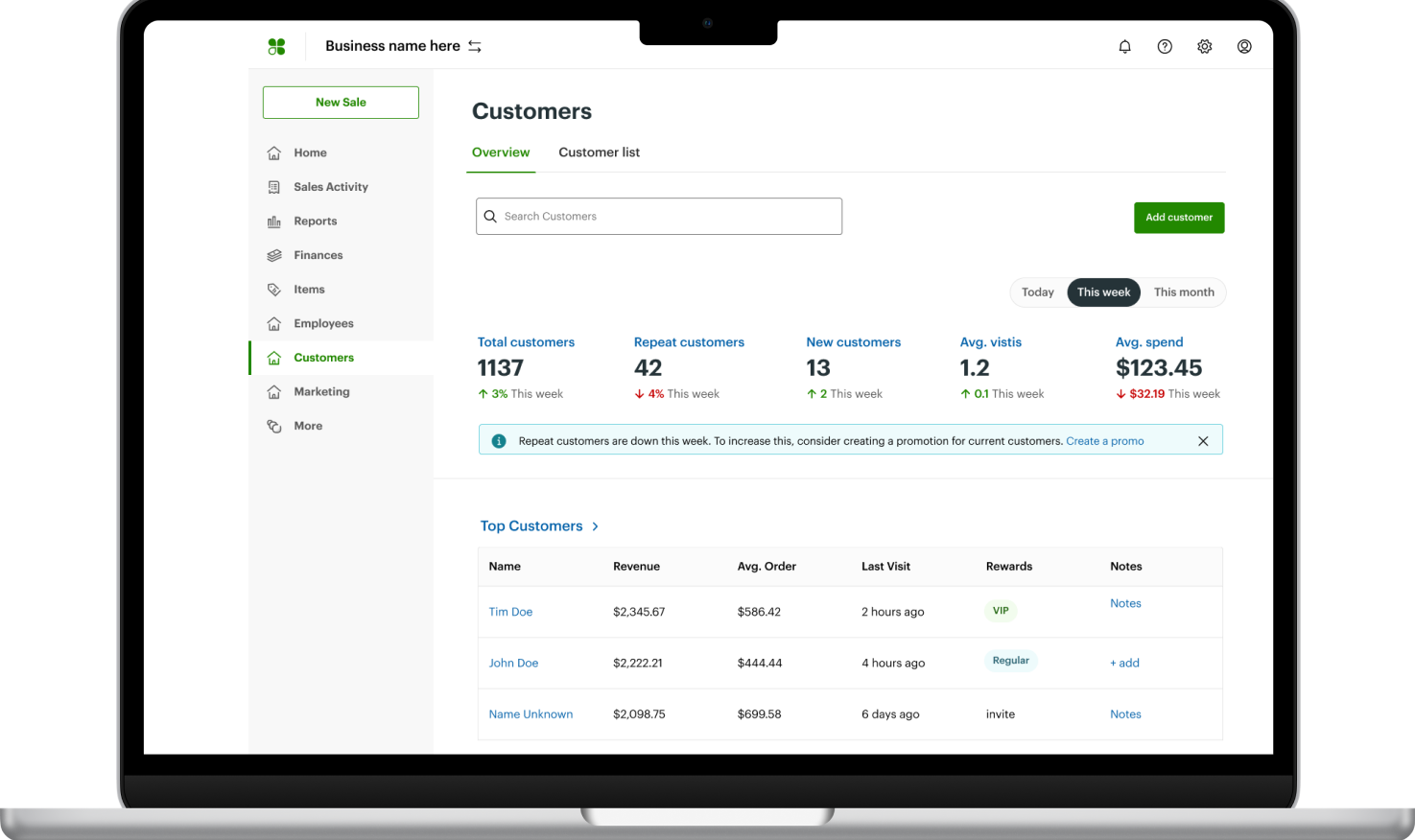
I led design end-to-end, from shaping the problem with product and stakeholders through IA, flows, and high-fidelity prototypes. Later in the project I transitioned execution to a contractor while staying in a directing and review role.
That handoff required me to document intent clearly enough that someone else could carry the work forward without losing the design rationale. Getting that transition right was as much a part of the job as the design itself.