
Overview
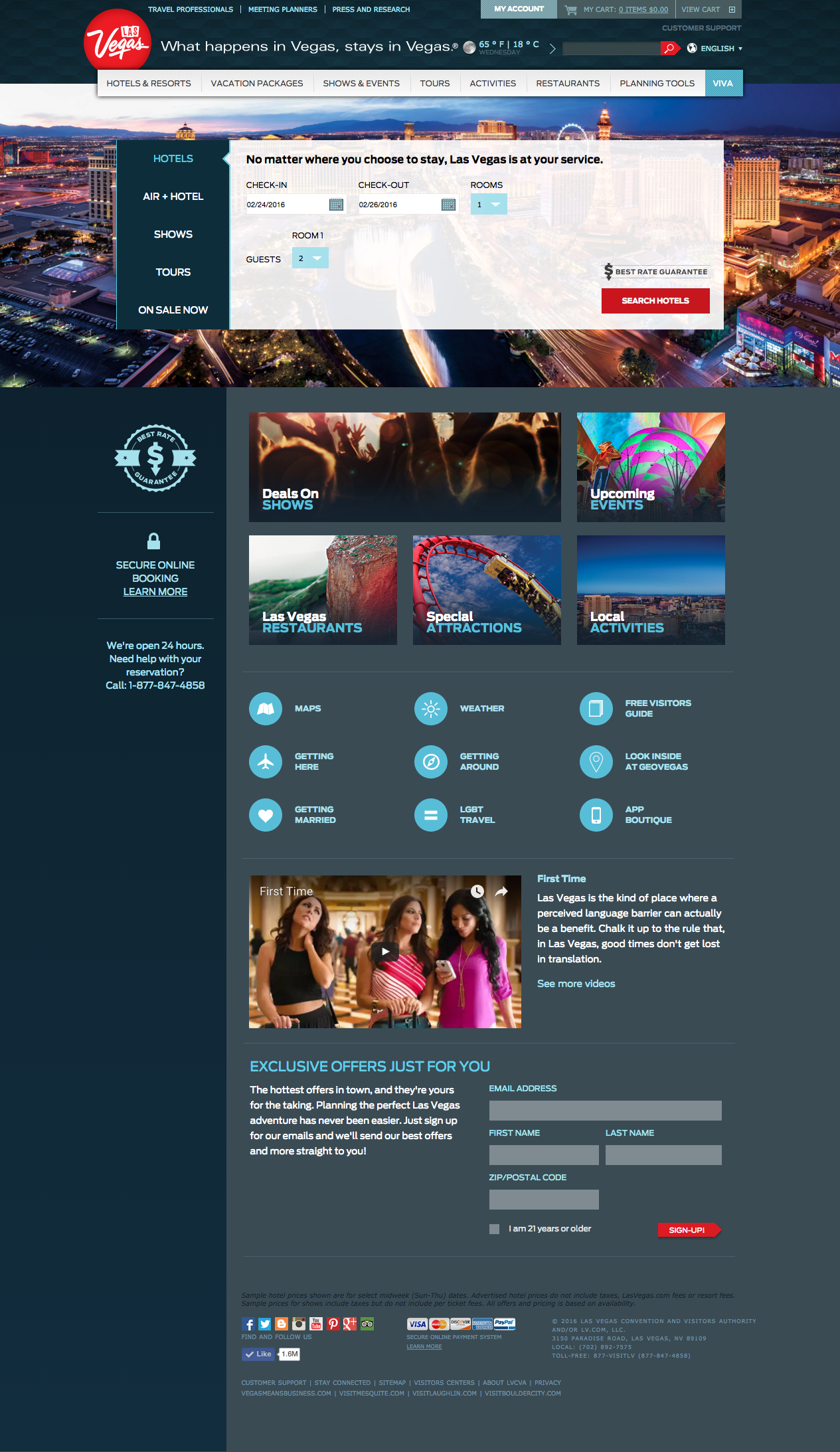
LasVegas.com sits at a genuinely difficult intersection. As the primary digital property of the Las Vegas Convention and Visitors Authority, it serves the entire purchase funnel from first awareness through completed booking. That means it has to function as an engaging destination marketing site and an effective Online Travel Agency at the same time, for the same visitors, often on the same page.
Those two goals are not naturally aligned. Inspirational content and transactional UI have different rhythms, different information hierarchies, and different definitions of success. Getting the balance right on a site averaging 1.3 million monthly visits is an ongoing design problem, not a one-time solution.
This project covered two parallel workstreams: a full mobile redesign to bring parity and optimization to an audience that had been underserved on that platform, and continuous desktop optimization driven by analytics and user feedback.
Created at R&R Partners for LVCVA
The Mobile Gap
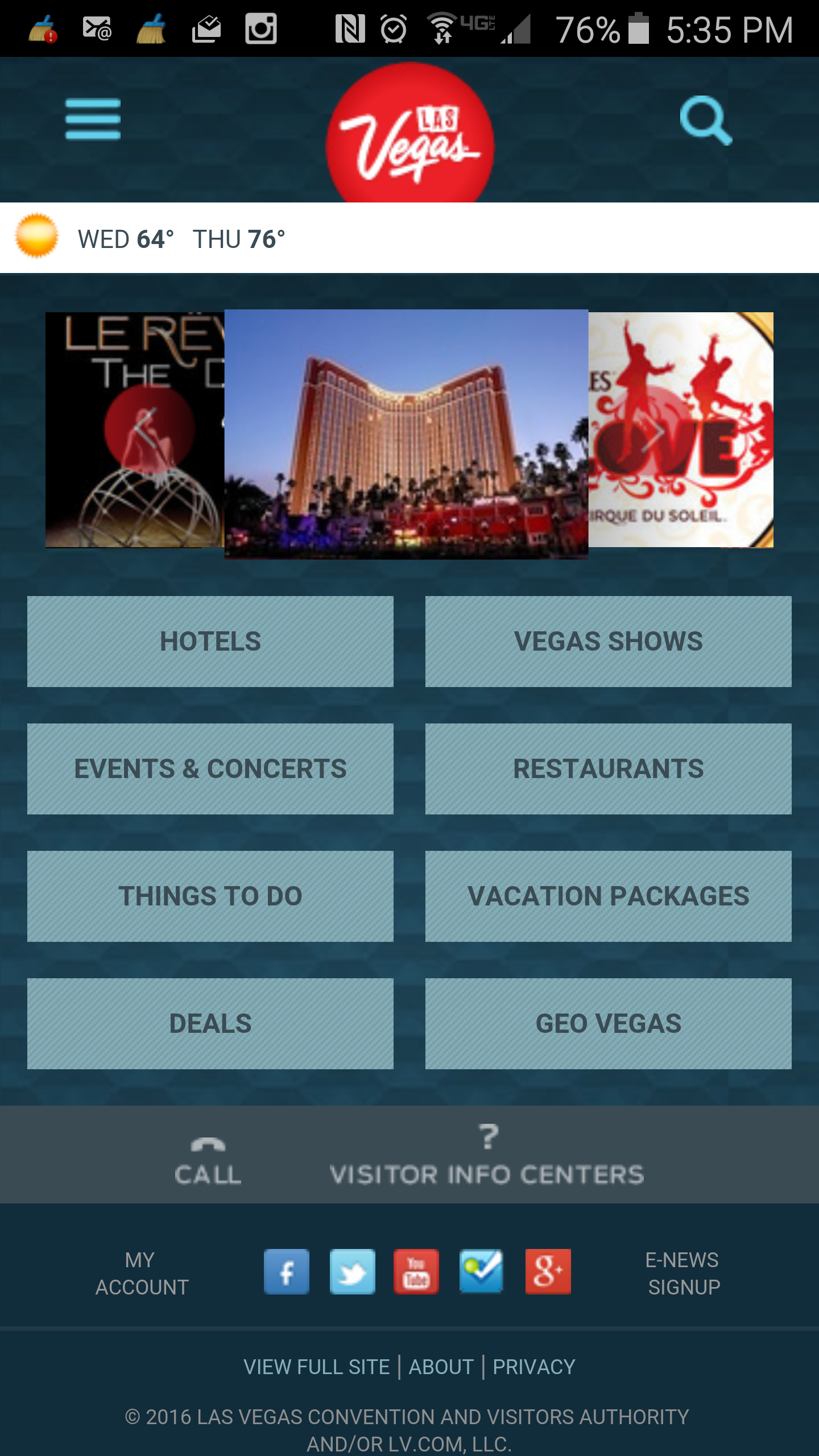
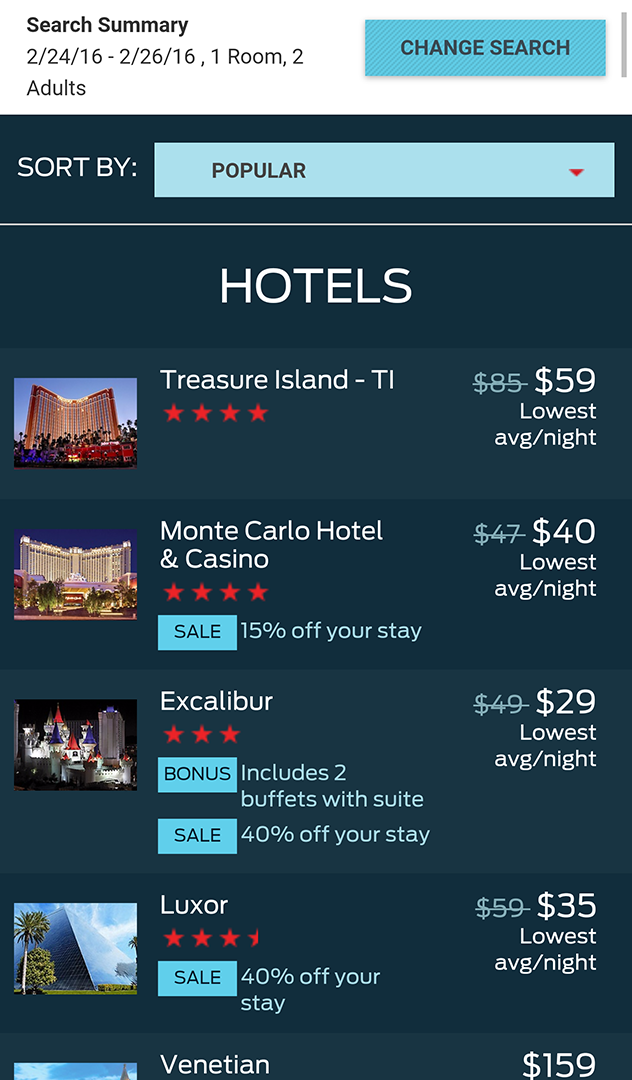
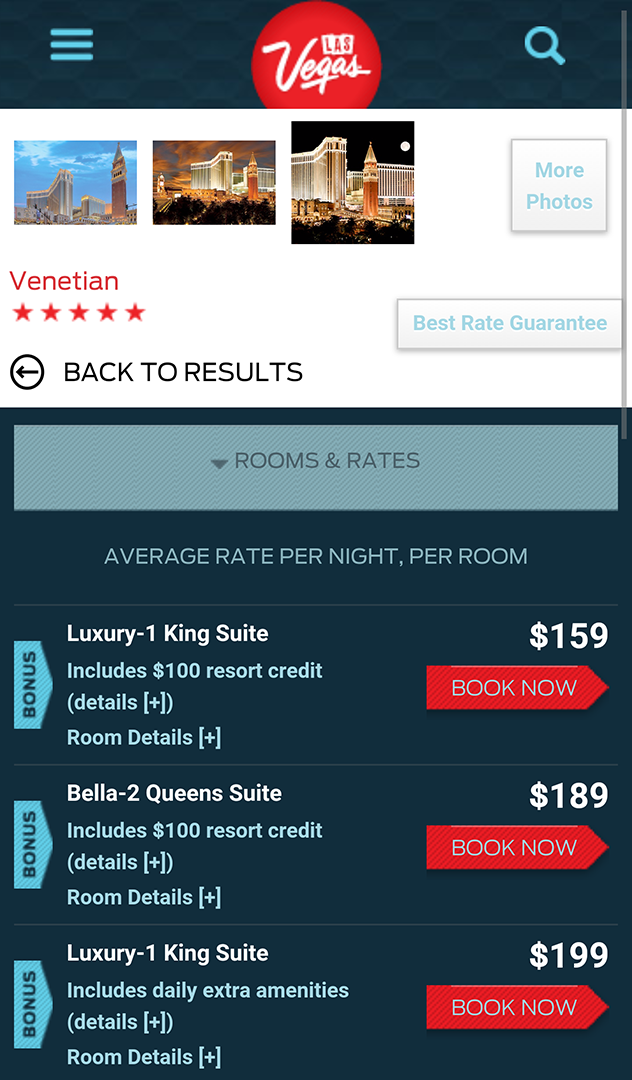
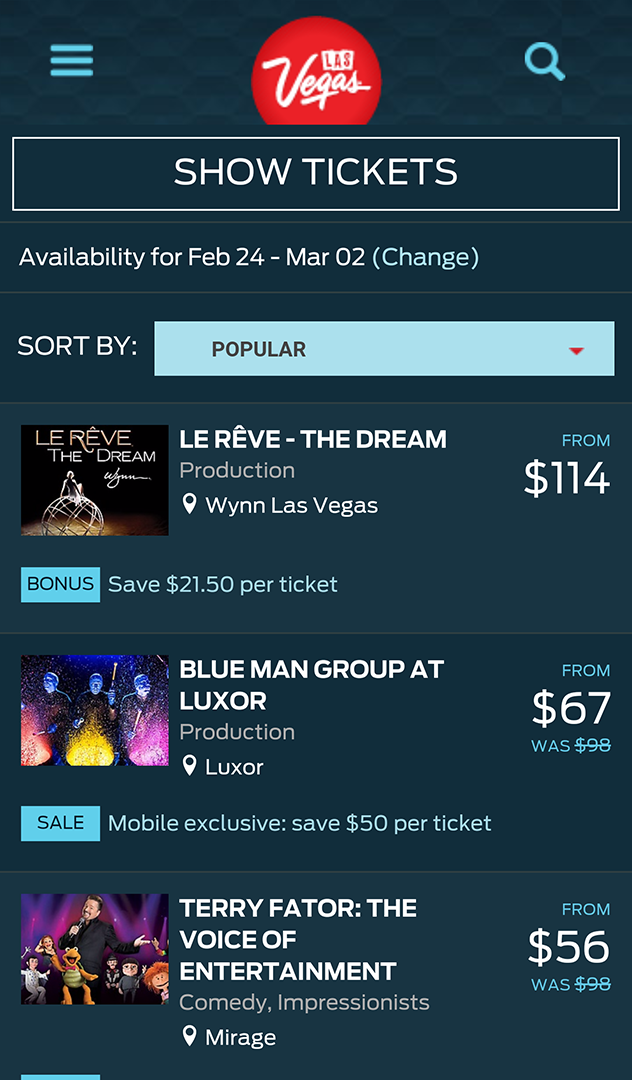
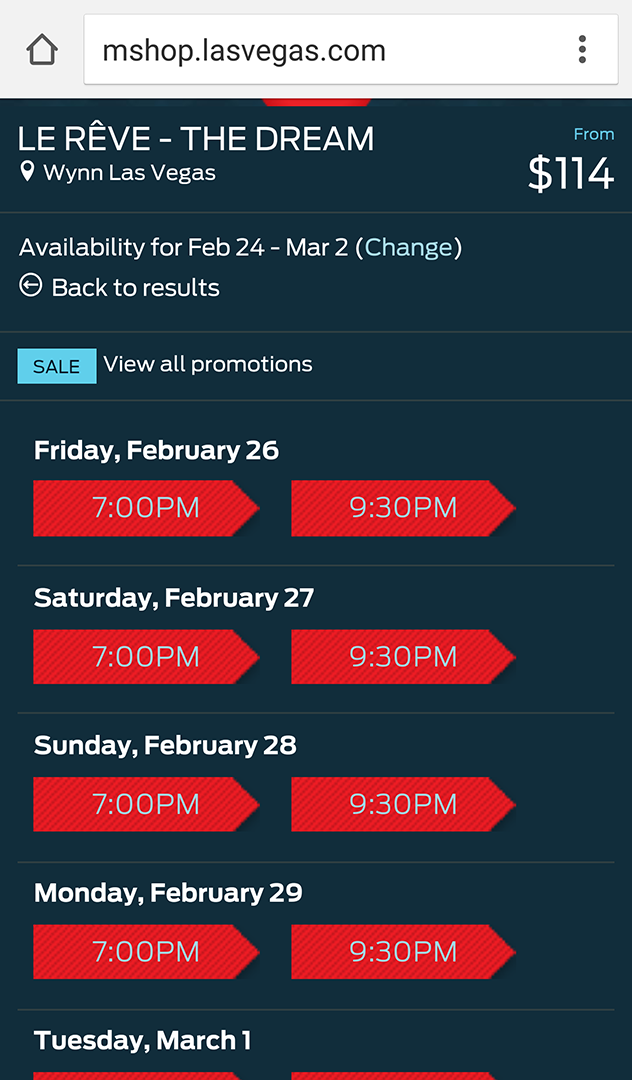
A significant portion of Las Vegas visitors were using the site on mobile devices, and there was no mobile-optimized version. The desktop site had the full range of functionality users needed: destination content, hotel search, show listings, booking integrations across multiple third-party systems. None of that translated well to small screens without deliberate redesign.
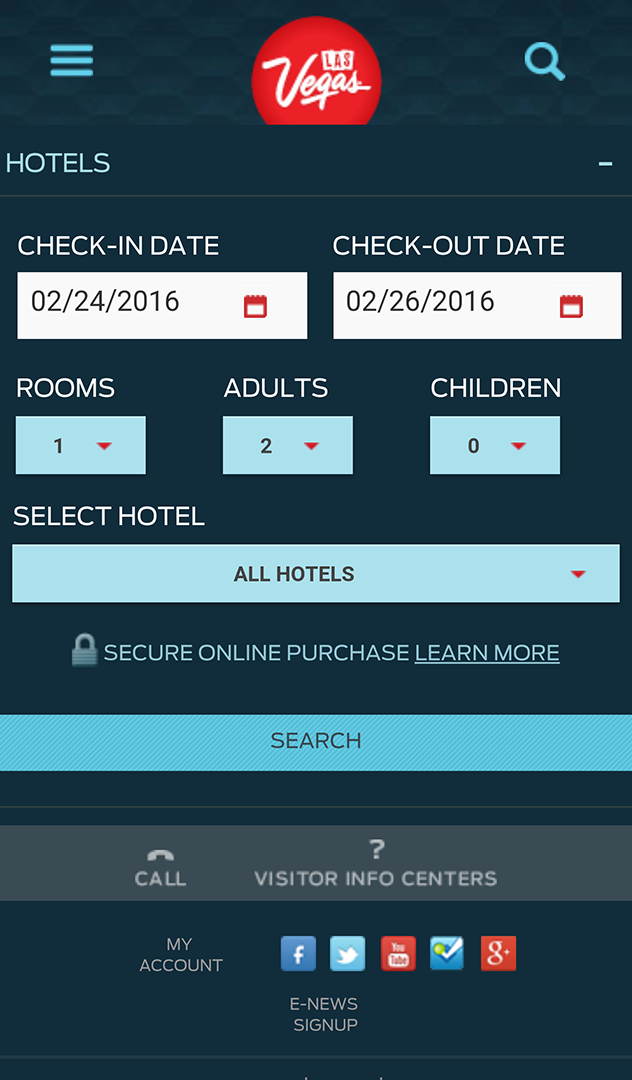
The mobile work wasn’t simply a responsive adaptation. It required rethinking the architecture and navigation from the ground up for a context where users are more likely to be in-trip or close to a decision, attention is shorter, and the booking path needs to be even more direct. At the same time the full content depth of the desktop experience had to remain accessible, because Las Vegas visitors use the site at every stage of their planning process.
I led the IA simplification, designed user flows across multiple technical integrations with OTA booking partners, and produced site-wide wireframes for the mobile experience.
Desktop Optimization
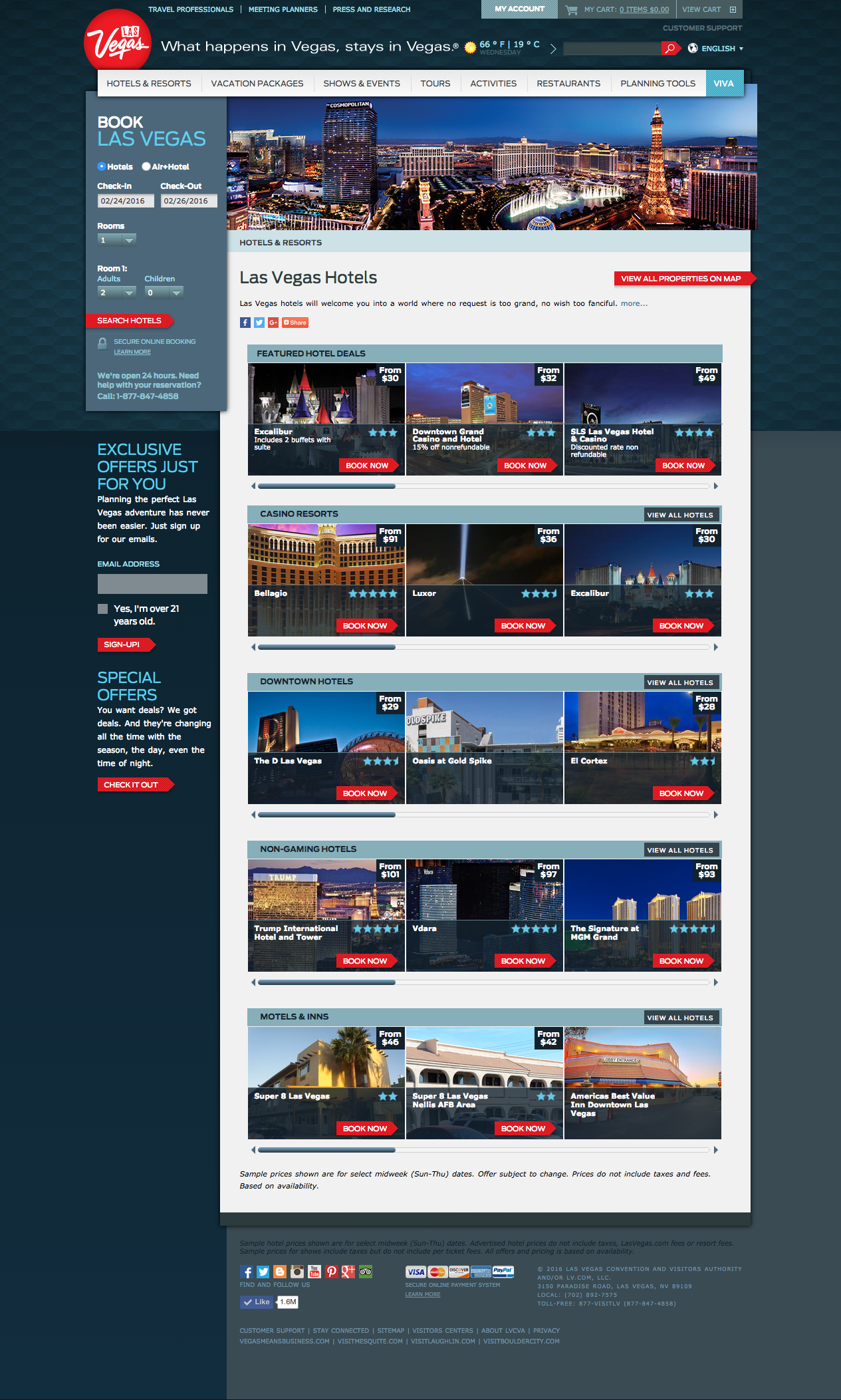
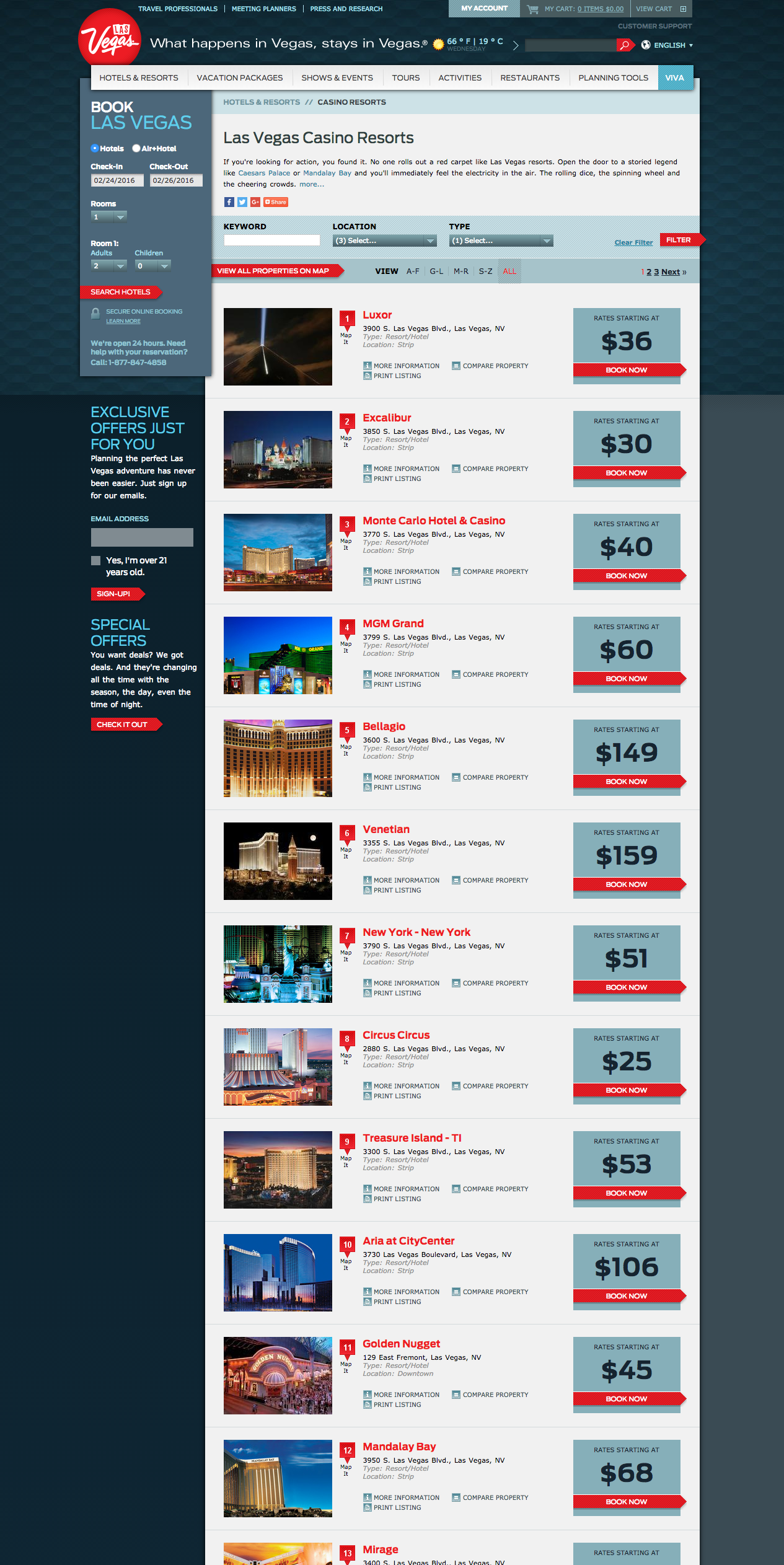
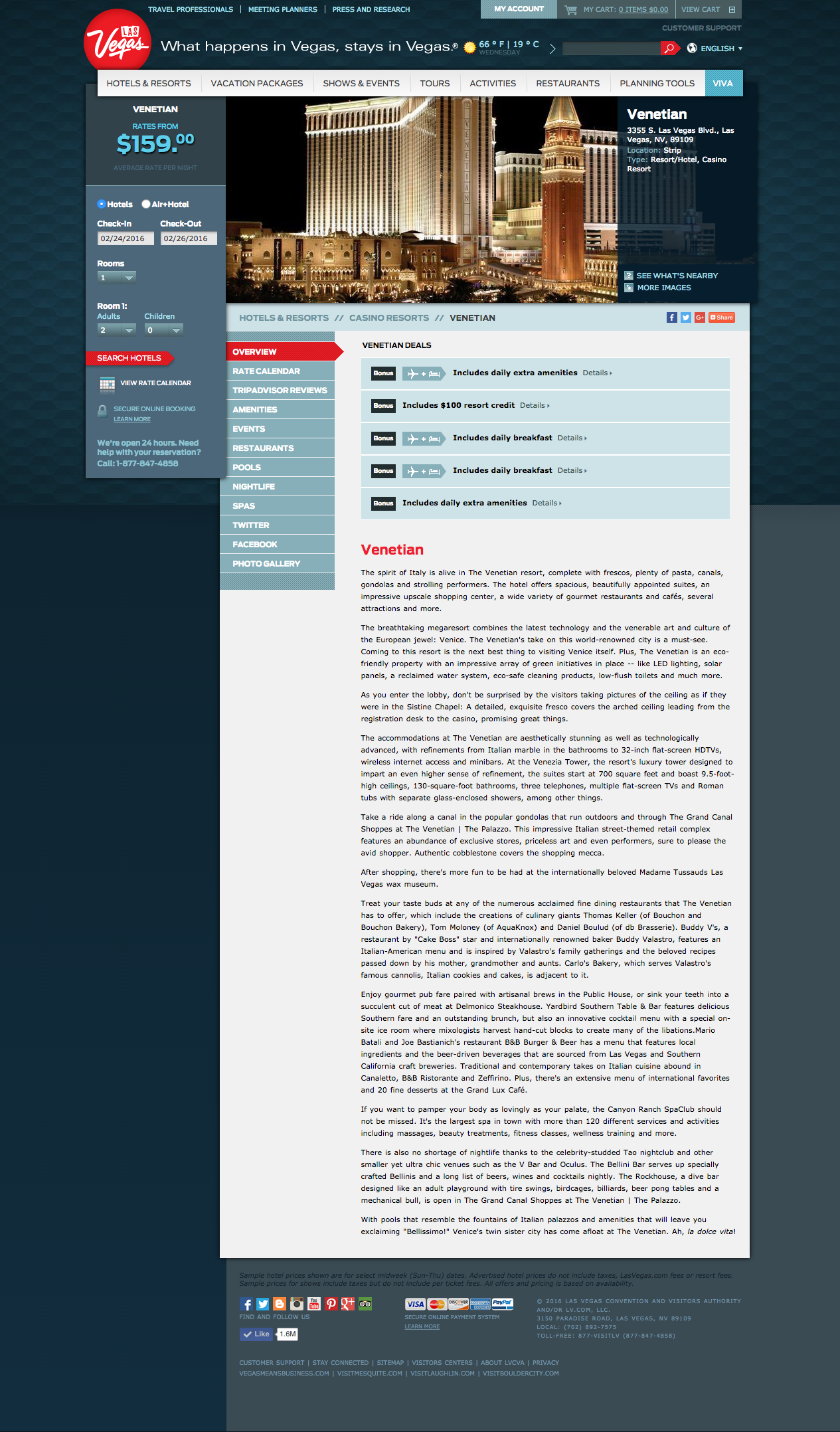
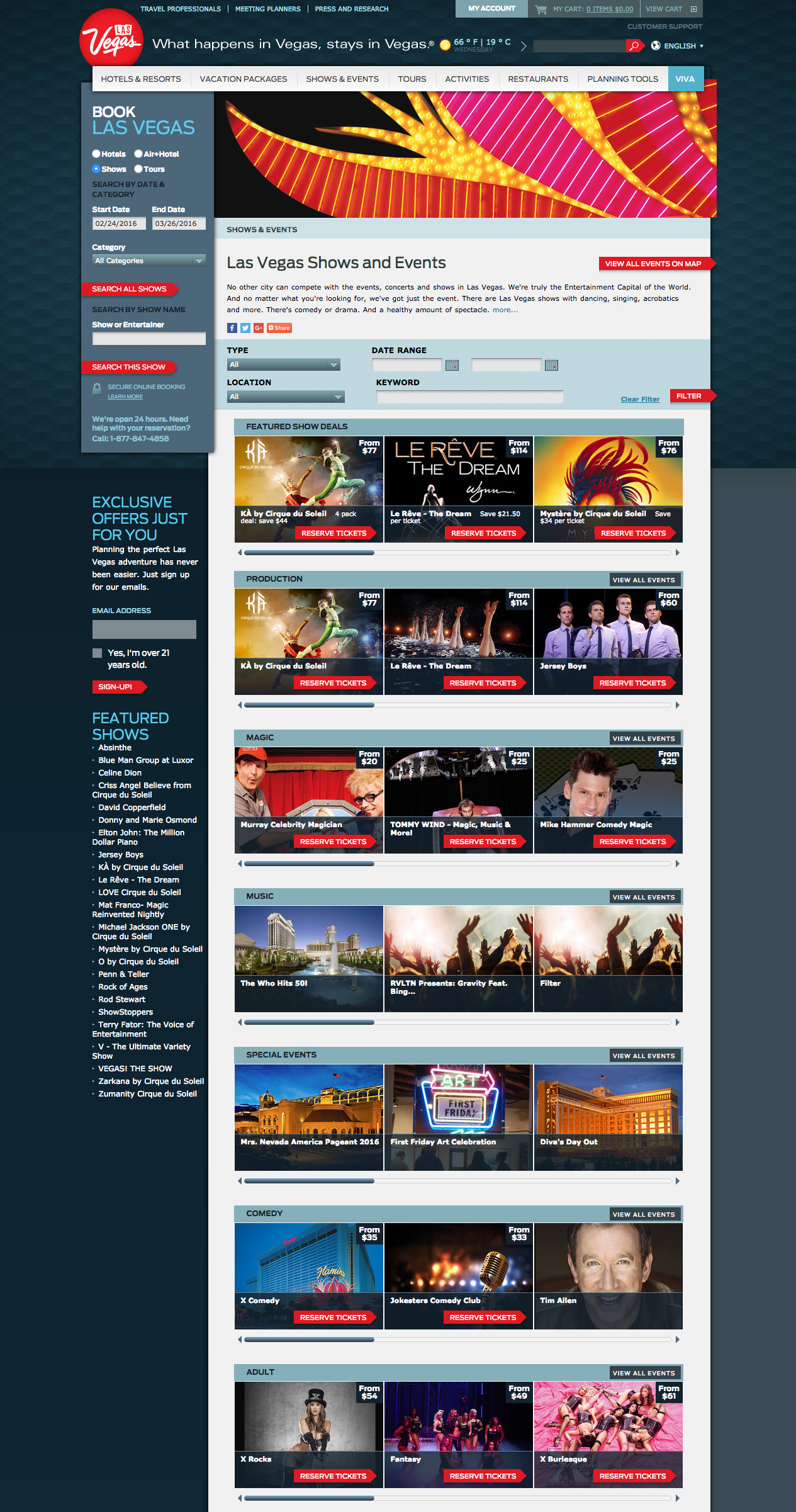
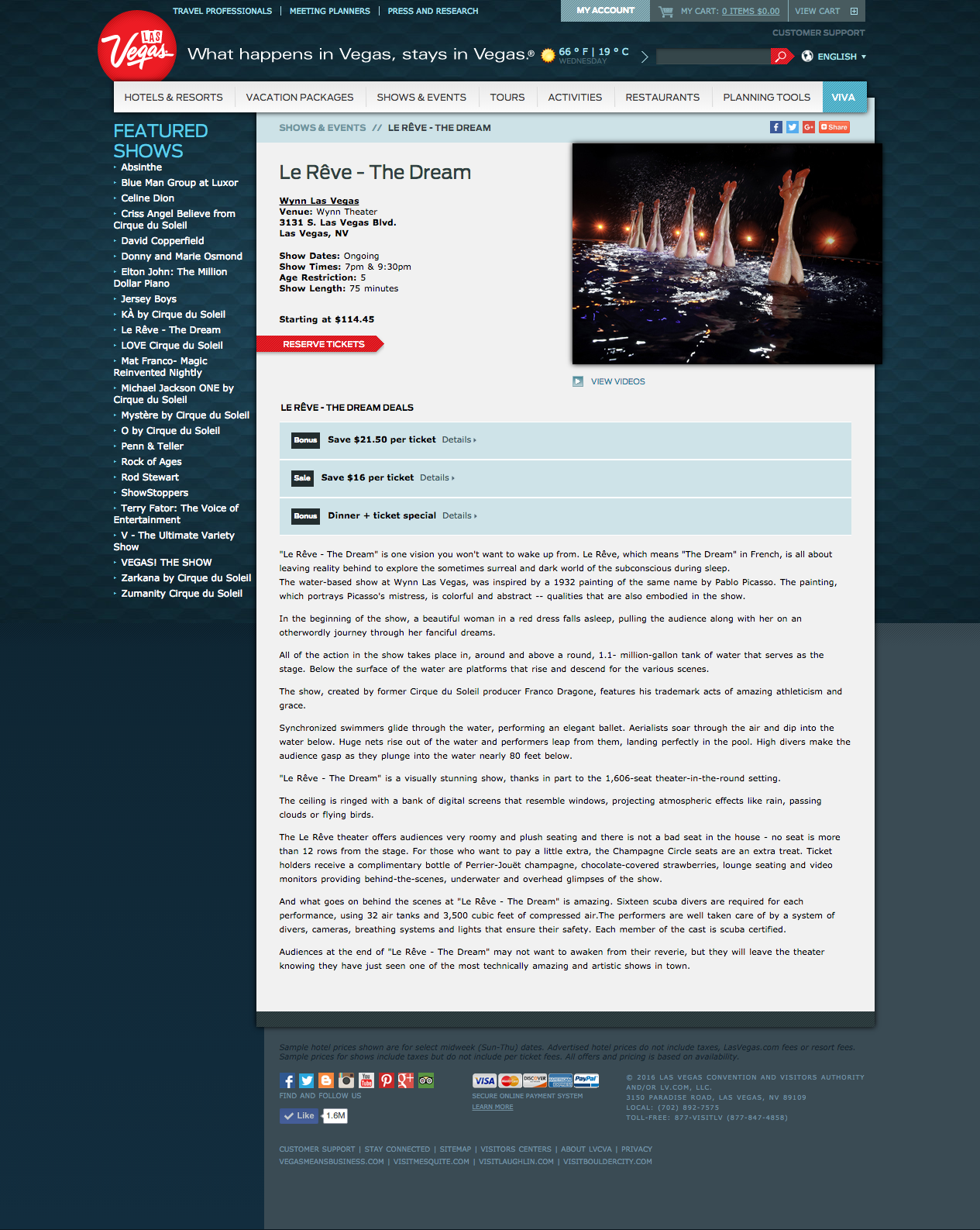
The desktop work was iterative by design. The team reviewed analytics and user feedback on a continuous cycle, identifying friction points, testing solutions, and measuring results. This kind of sustained optimization work is less visible than a launch but often more impactful: compounding small improvements on a high-traffic site adds up quickly.
The tension that defined most of the desktop work was the same one that defines the site overall: when a user is browsing hotel options or reading about shows, how much should the experience push toward booking versus letting them explore? Getting that balance wrong in either direction costs the client. Too aggressive and you interrupt the research phase and lose users before they’re ready. Too passive and you miss conversion opportunities from visitors who are ready to book but not finding a clear path to do it.
Impact
Booking widget searches increased from 20.5% to 27.3% over two years of iterative optimization, a nearly 7-point lift on a site doing 1.3 million monthly visits.
That kind of sustained movement in conversion behavior on a mature, high-traffic site reflects consistent, evidence-driven design work rather than a single big change.
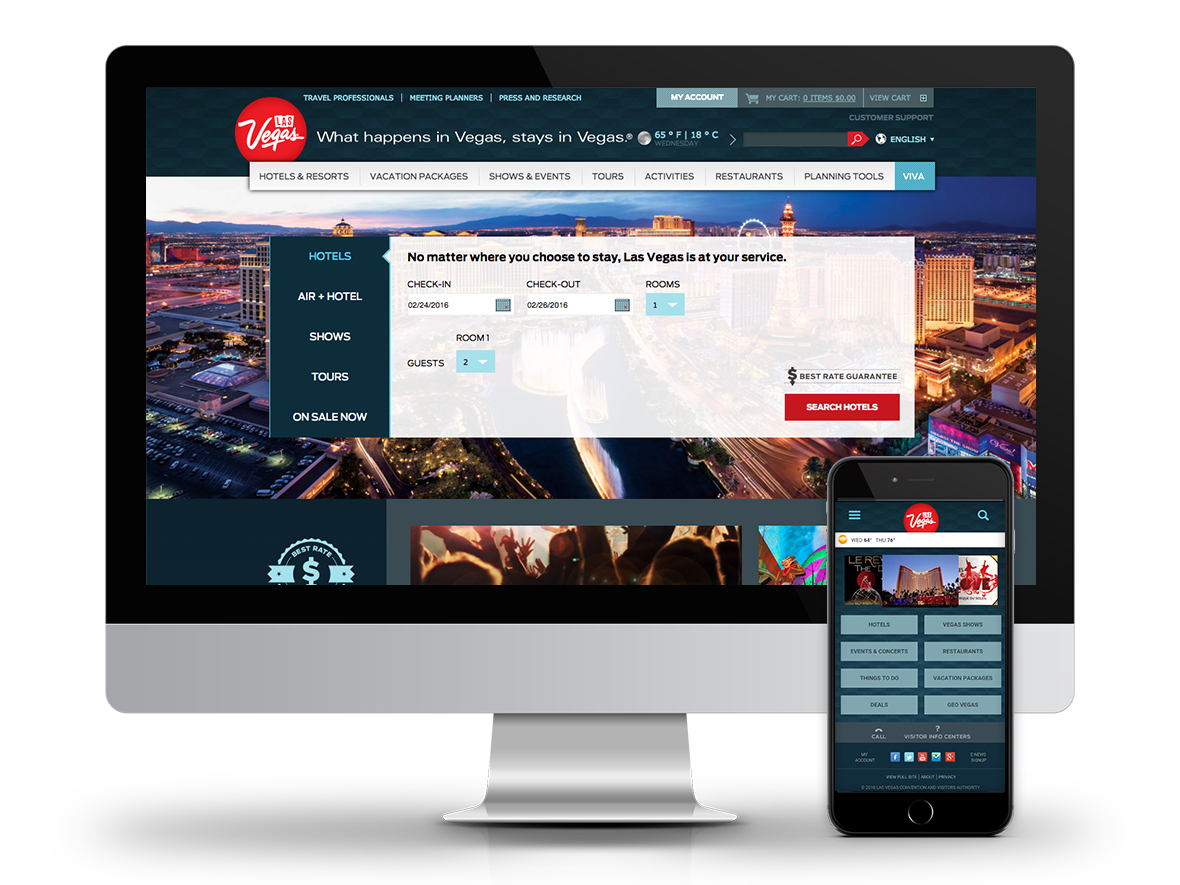
I led UX across both workstreams, covering IA, user flows, interaction design, UI, and ongoing analytics and iteration. The mobile redesign was the larger discrete project; the desktop optimization work was more continuous and required a different discipline: staying attentive to signal in the data, forming clear hypotheses, and executing changes with enough precision to learn from them.