
Overview
Laughlin is one of several southern Nevada destinations represented by the LVCVA alongside Las Vegas. The VisitLaughlin.com site serves the same dual purpose as LasVegas.com: destination marketing and OTA referral bookings in one experience. But Laughlin is a meaningfully different destination, serving a meaningfully different audience, and the design had to reflect that rather than simply inherit patterns from the larger site.
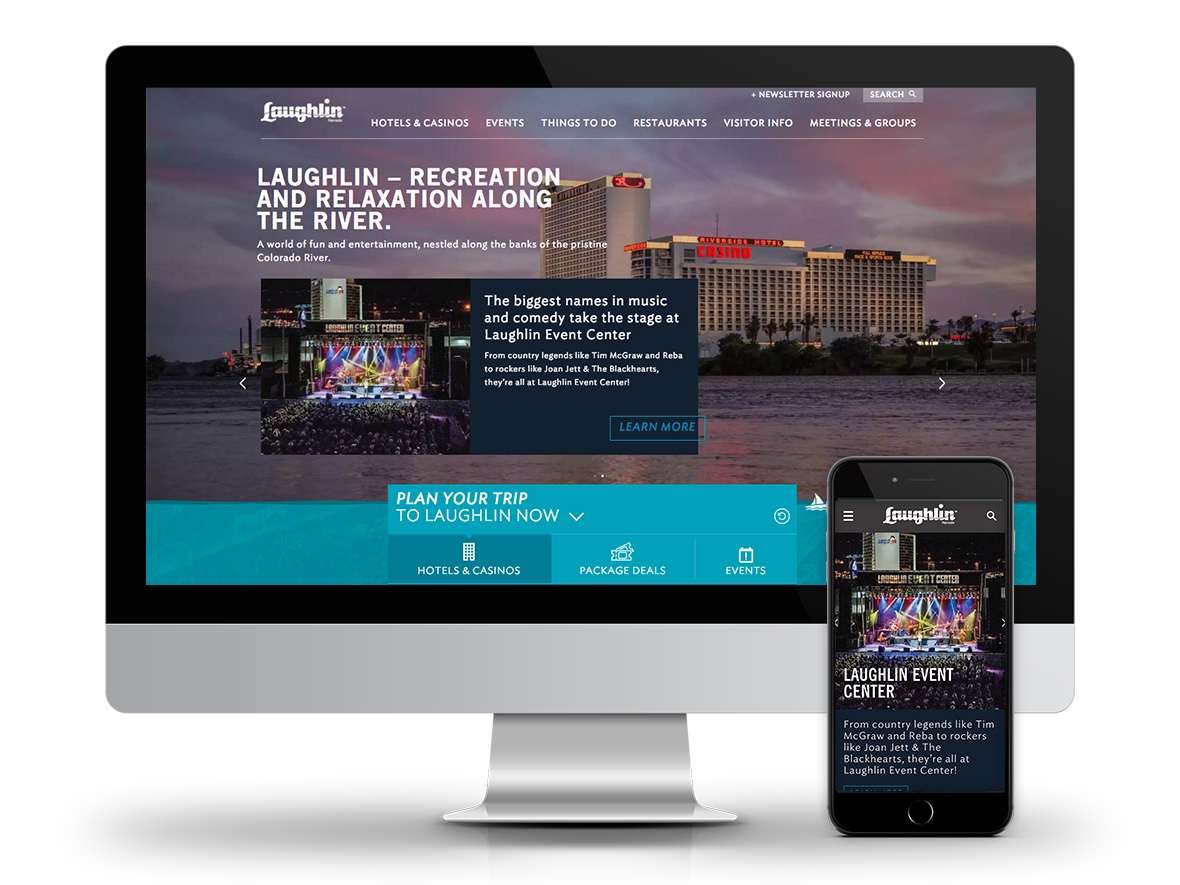
I was the sole designer on the project, responsible for IA, interaction design, and UI across both desktop and a fully responsive mobile experience.
A Different Audience, A Different Problem
The visitors who choose Laughlin over Las Vegas are not the same people. The Laughlin audience skews older, more value-conscious, and more repeat-visitor heavy. They’re not looking for the overwhelming scale and spectacle of the Strip. They’re looking for a relaxed experience with a clear sense of what’s available and how to book it without friction.
That audience profile shaped nearly every design decision. The inspirational content layer that plays a significant role on LasVegas.com matters less here. The inventory is smaller: fewer hotels, fewer shows, a more contained set of options. The funnel is shorter and more direct. Visitors tend to know what Laughlin is and arrive closer to a booking decision, which means the design needed to get out of their way faster than its Las Vegas counterpart.
Adapting the System, Not Copying It
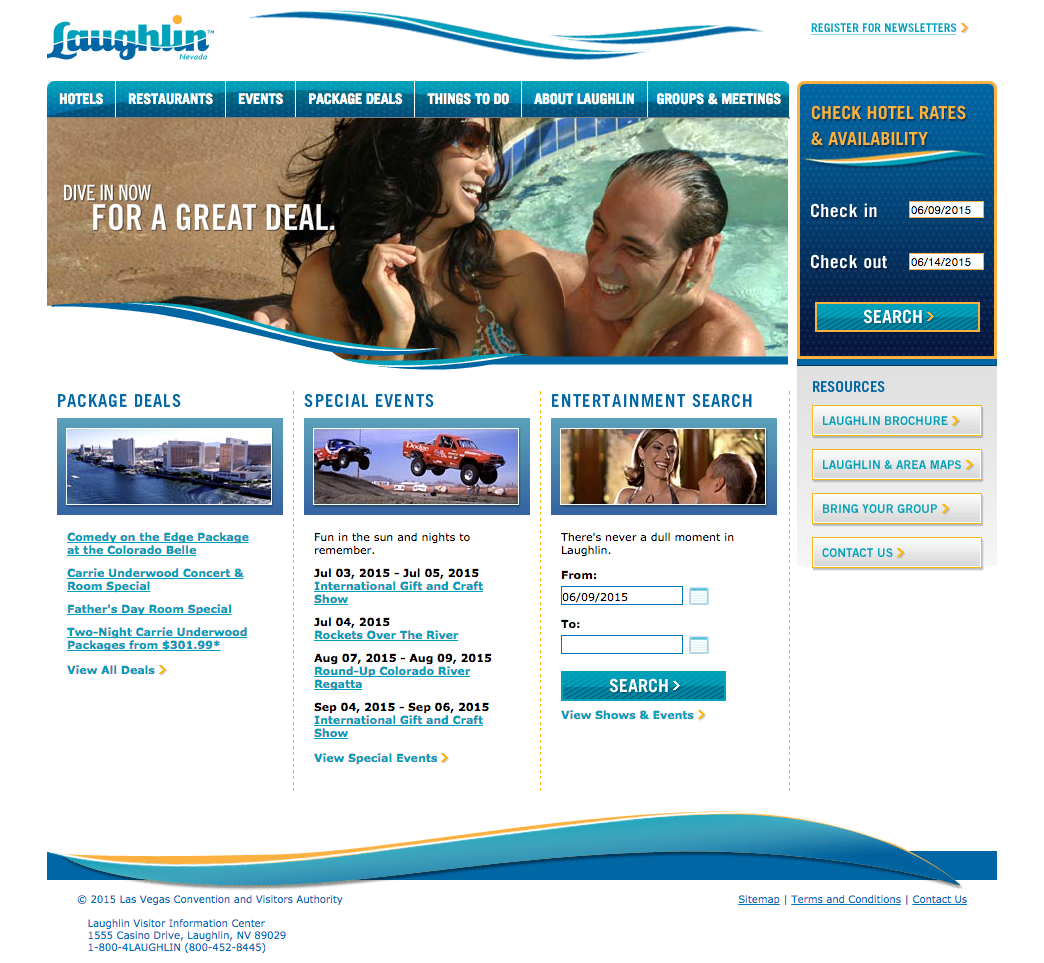
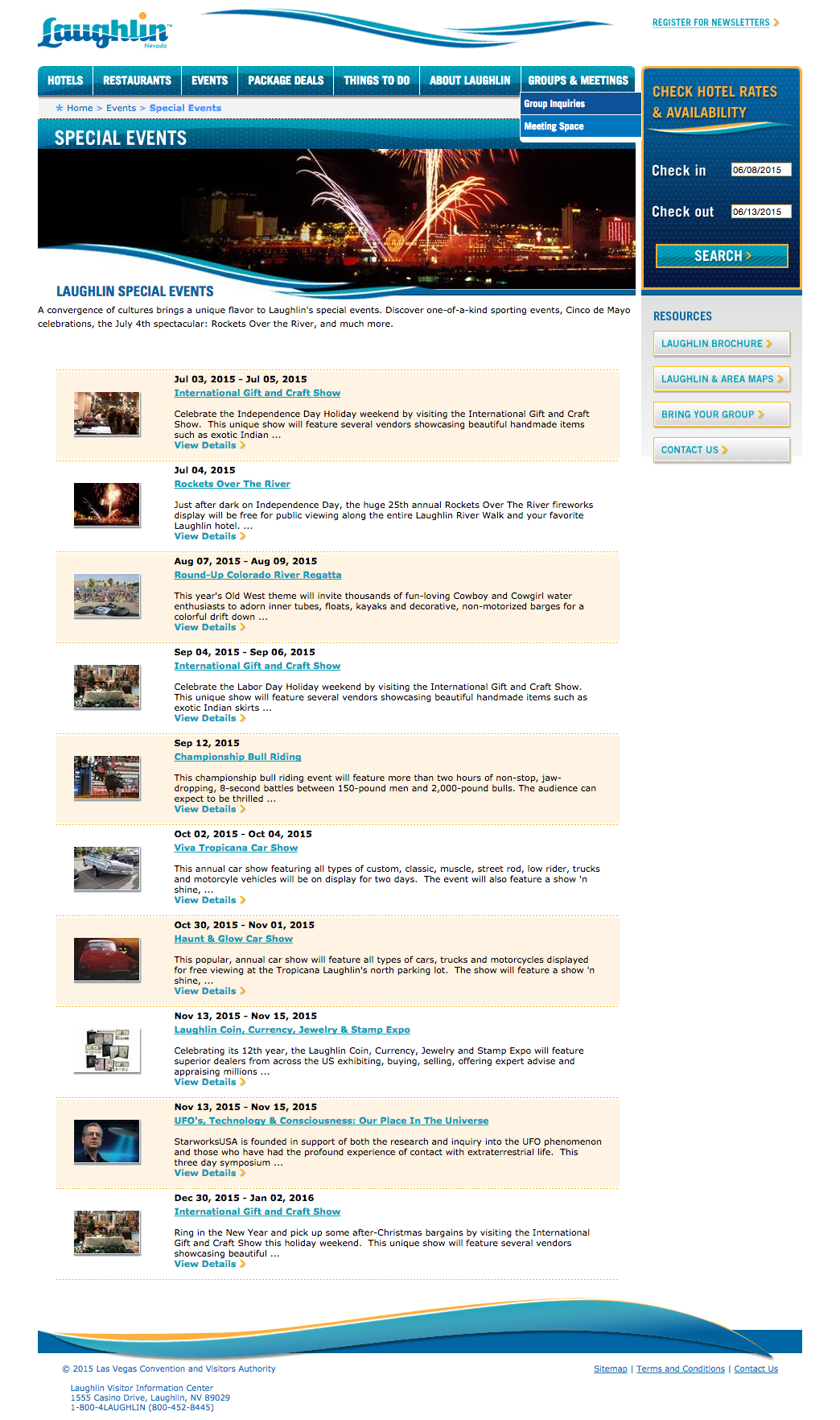
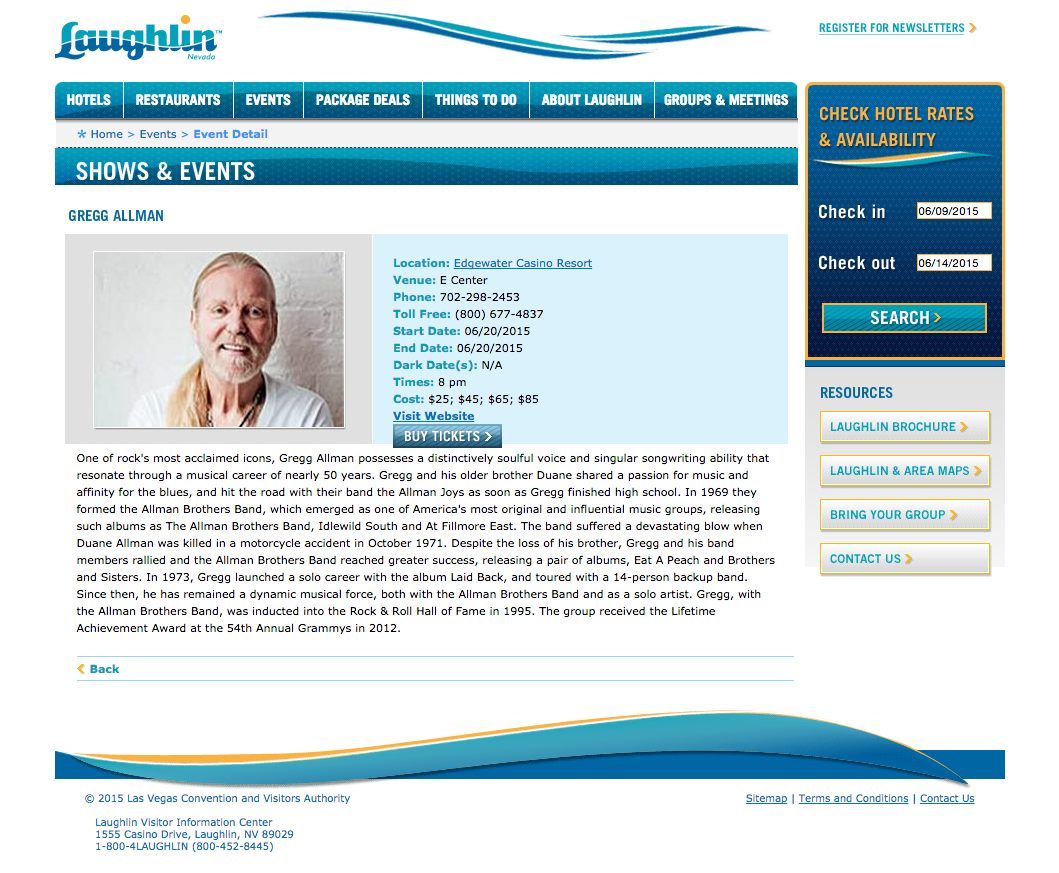
The structural approach drew from the same foundation as LasVegas.com: a DMO/OTA hybrid site with a similar information hierarchy, booking integrations, and content taxonomy. But applying that structure without adaptation would have produced a site that felt generic rather than considered.
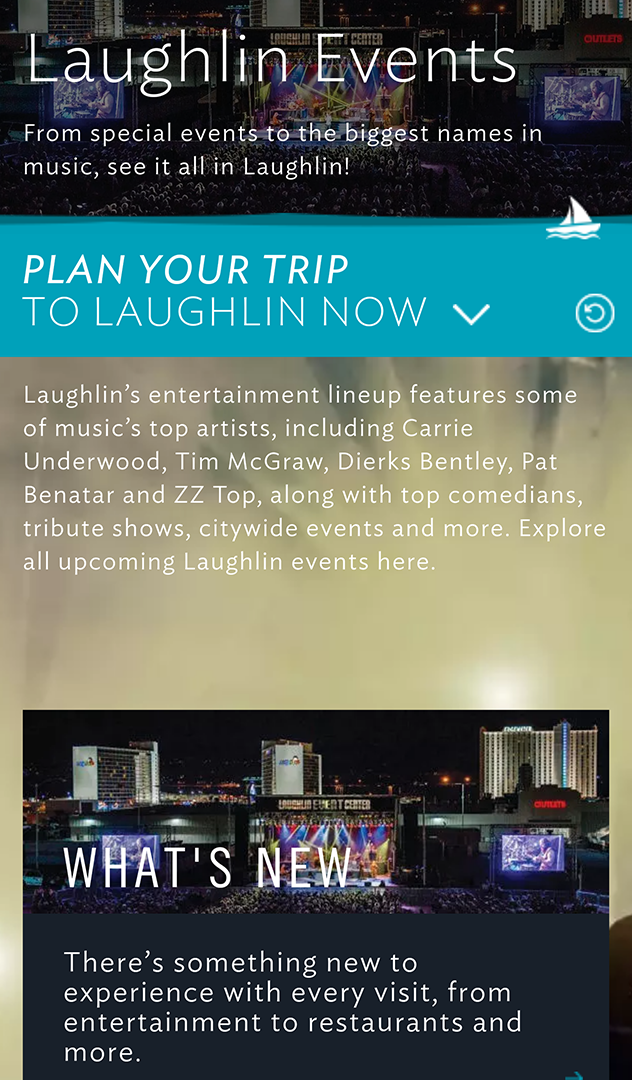
The IA was updated to reflect the narrower inventory and more direct user intent. Navigation was simplified to reduce the overhead that makes sense on a larger site but creates unnecessary friction on a smaller one. The visual design was developed within Laughlin’s own brand identity rather than carried over from Las Vegas, which meant finding a visual language that conveyed a different kind of appeal: laid-back, accessible, unpretentious.
The responsive and mobile work followed the same logic: Laughlin visitors on mobile are often close to or already in-destination, and the mobile experience needed to prioritize quick access to bookings and event details over broad exploration.
Outcome
The redesign improved both engagement and conversion for the destination. Specific metric tracking for this project wasn’t available at time of writing, but the directional results were positive across the KPIs the LVCVA used to evaluate the site.
The more durable outcome was a site that finally matched the destination it represented: clear, approachable, and built around the way Laughlin’s visitors actually use it rather than scaled down from a larger template.
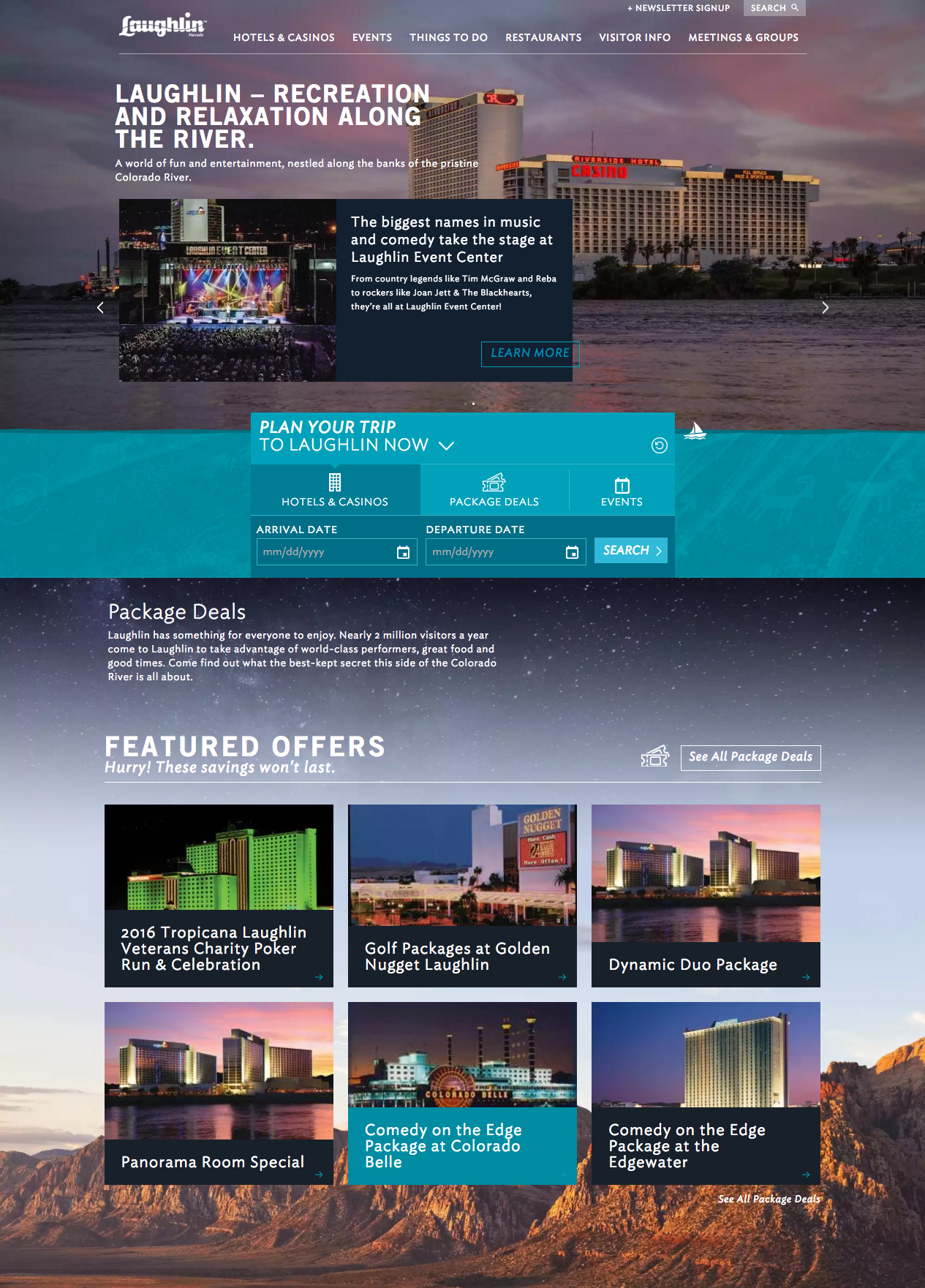
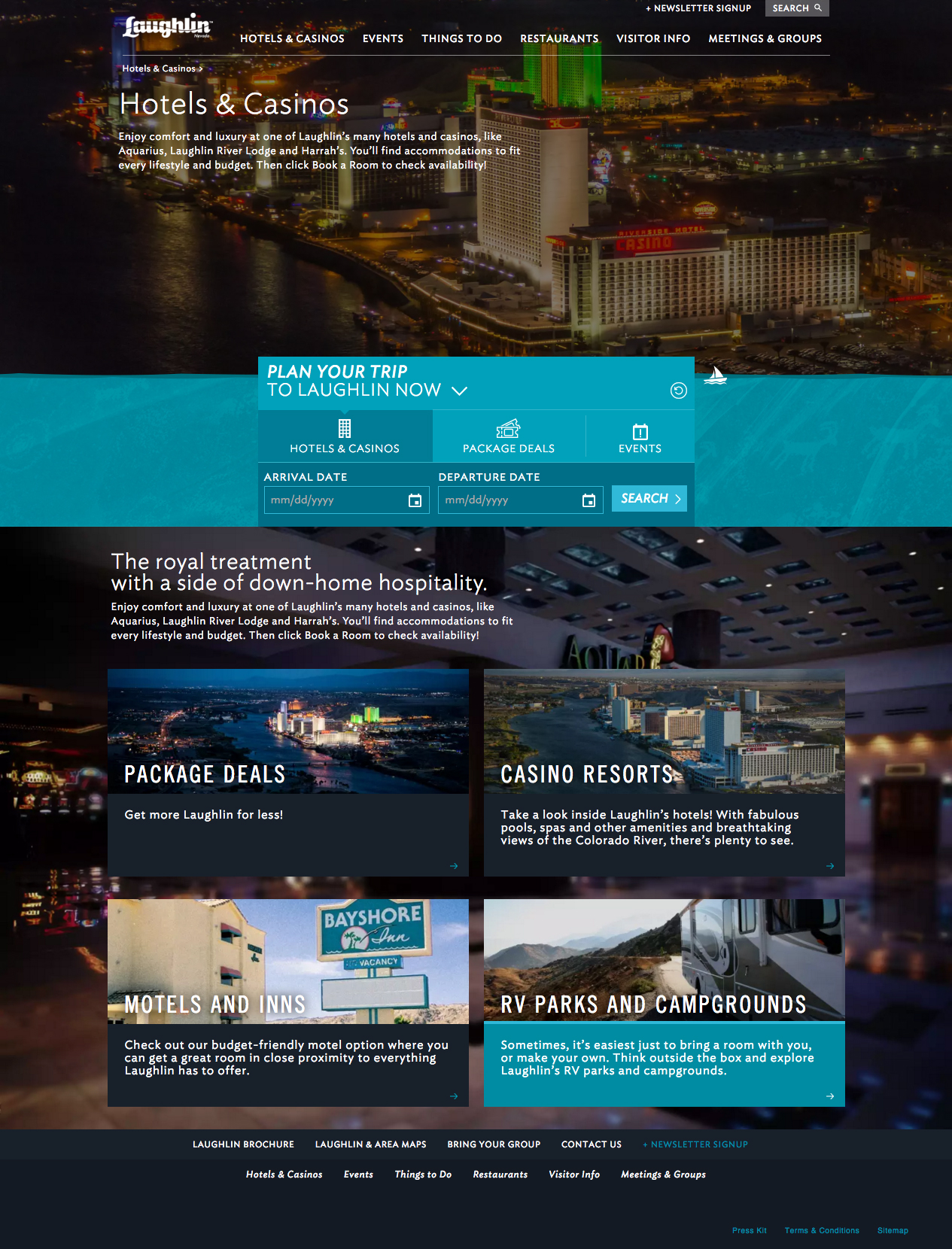
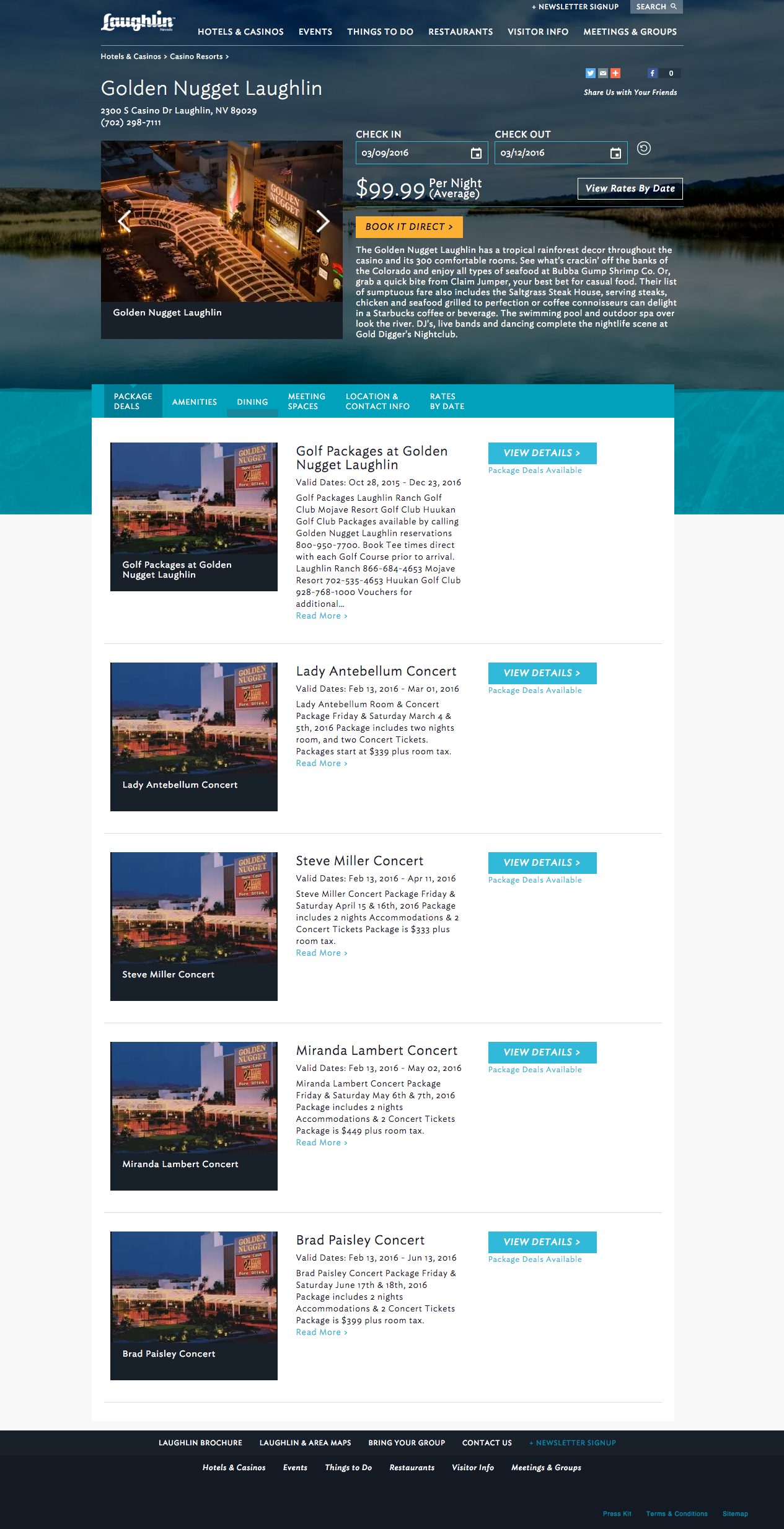
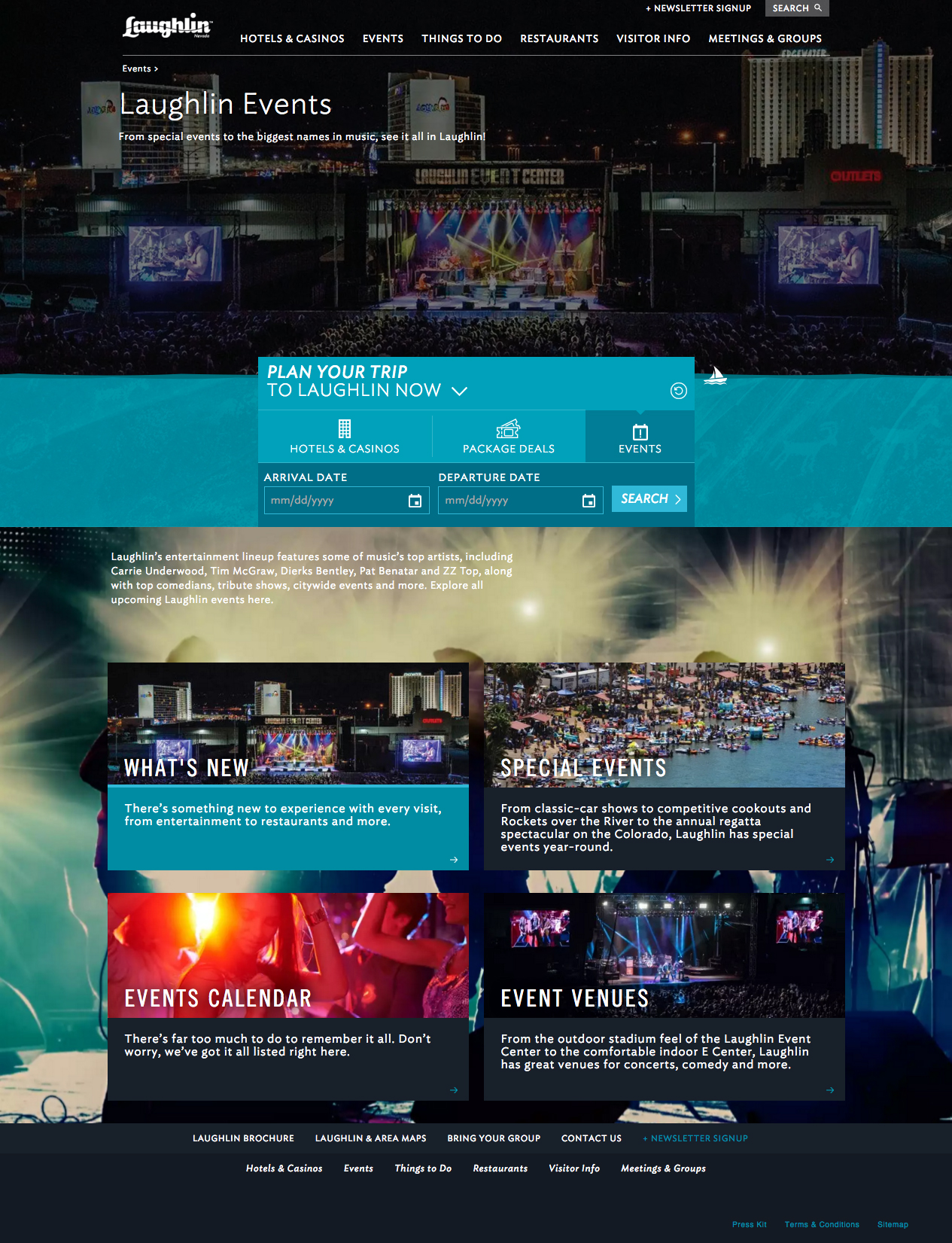
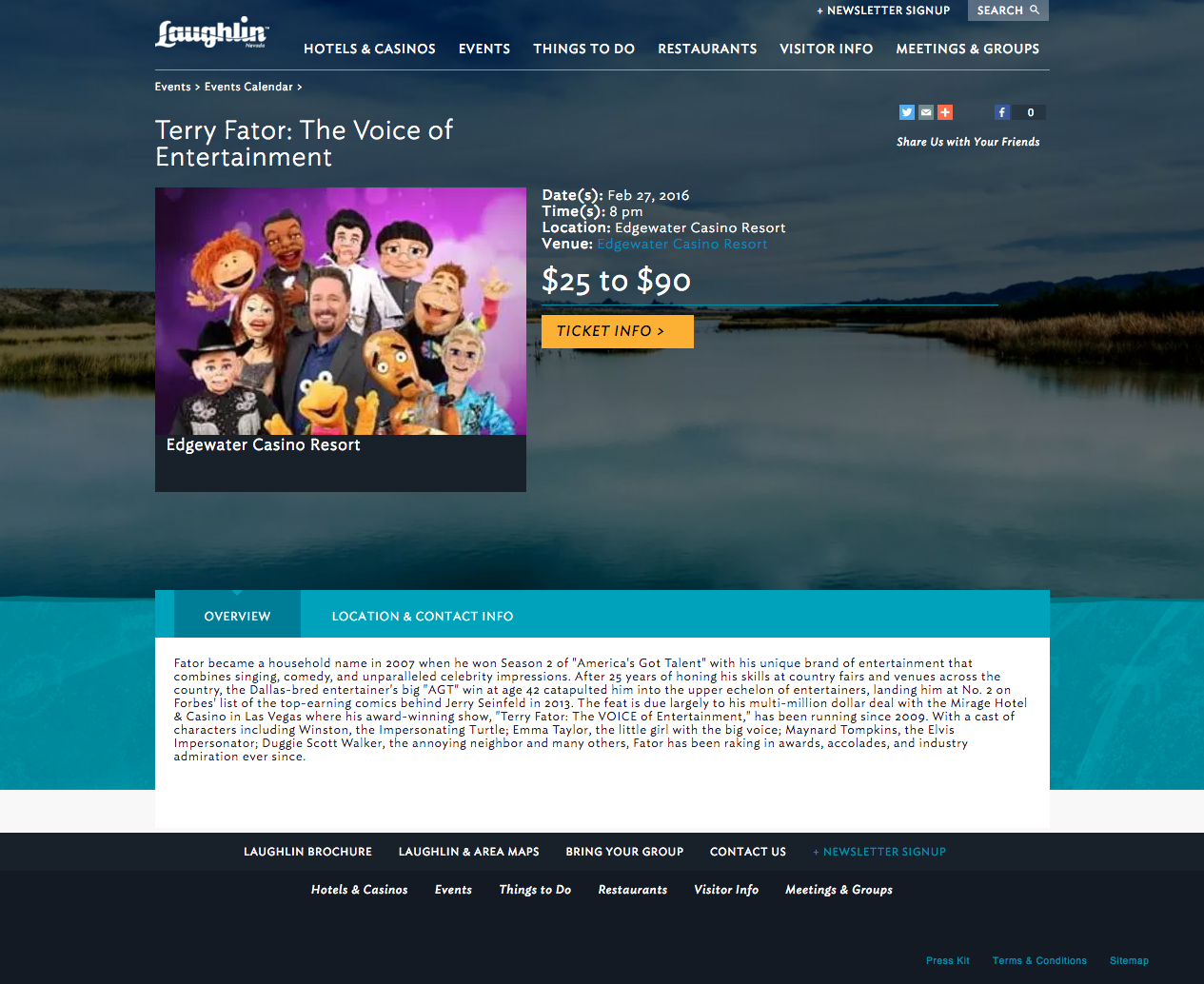
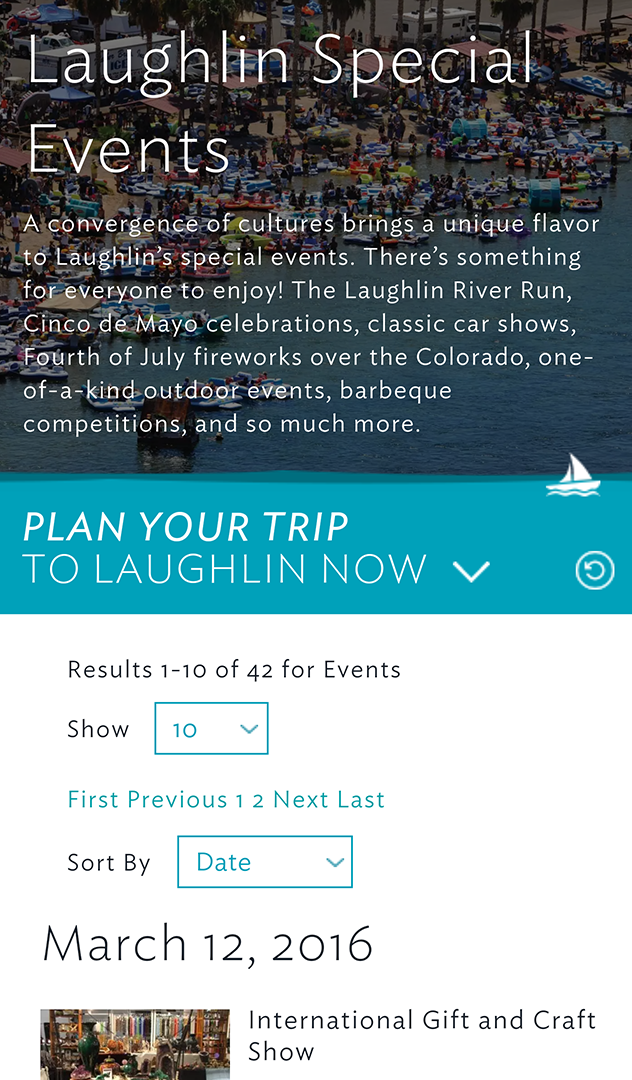
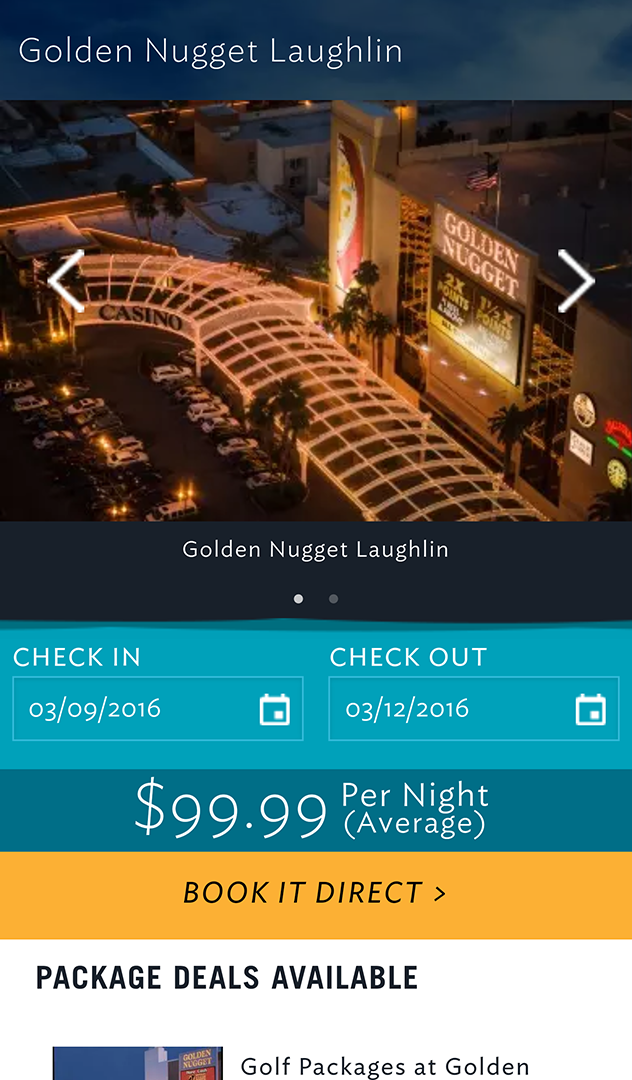
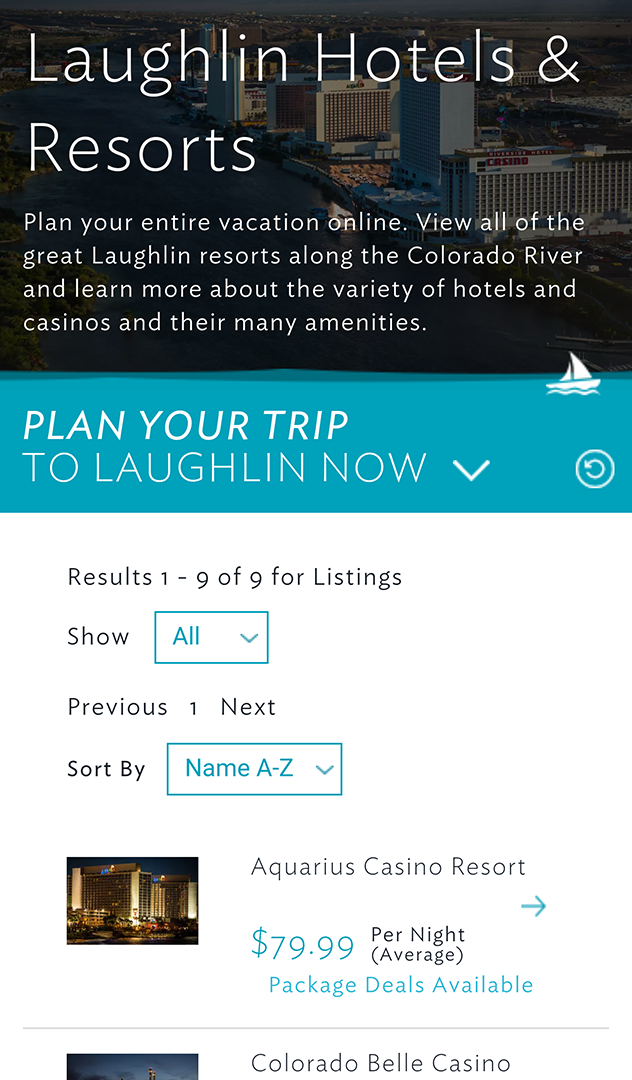

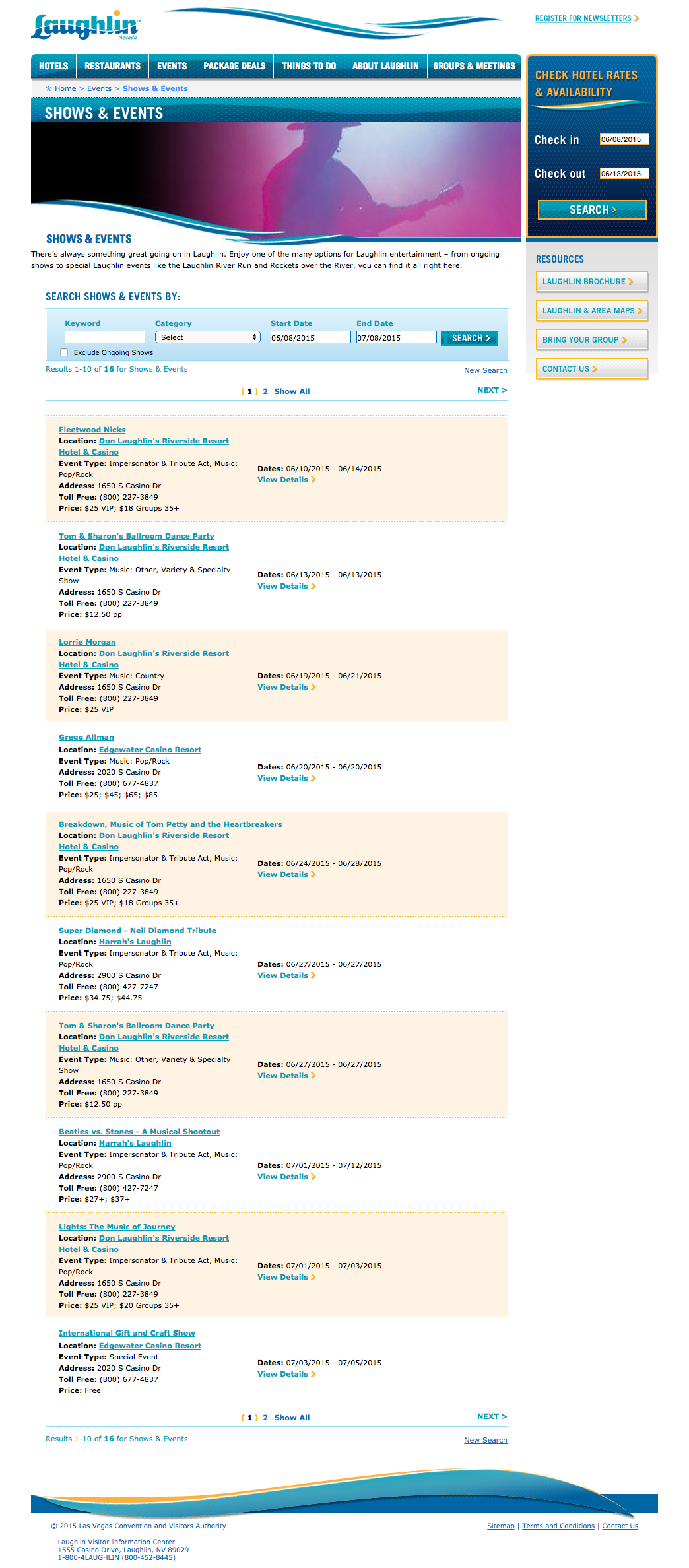
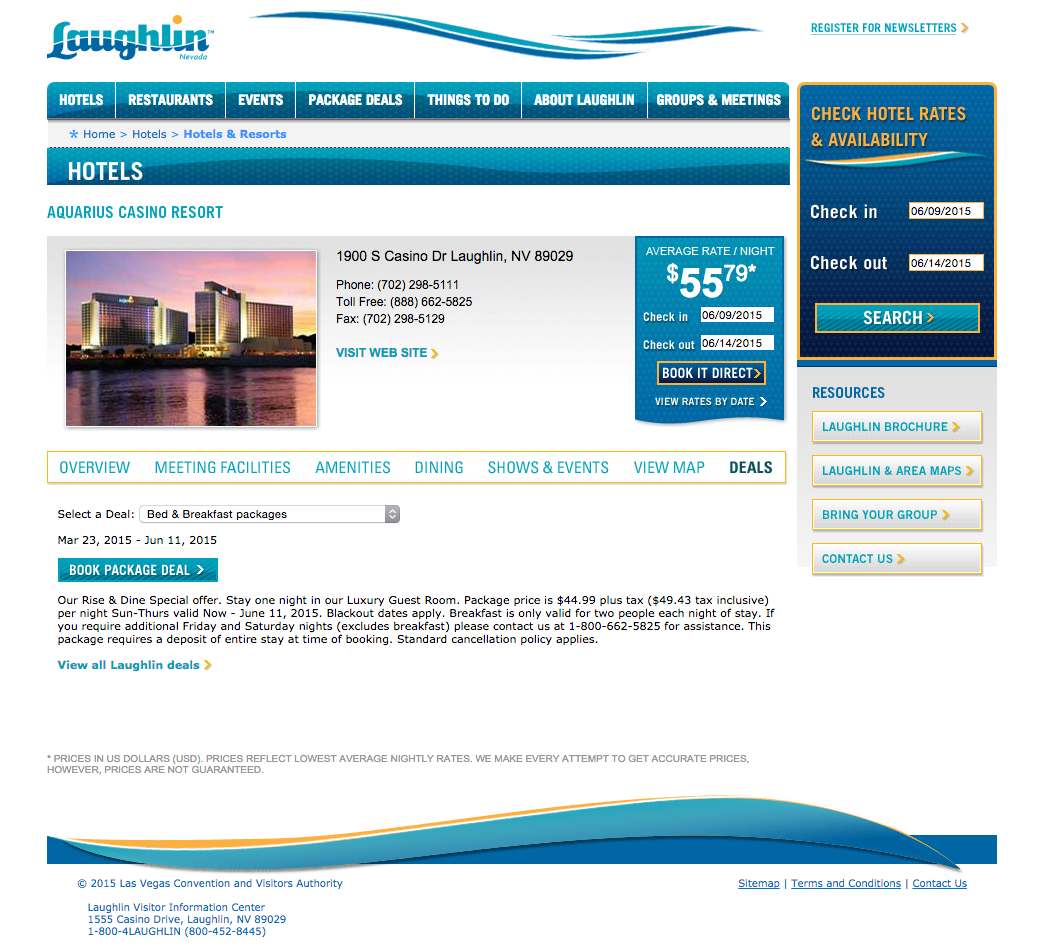
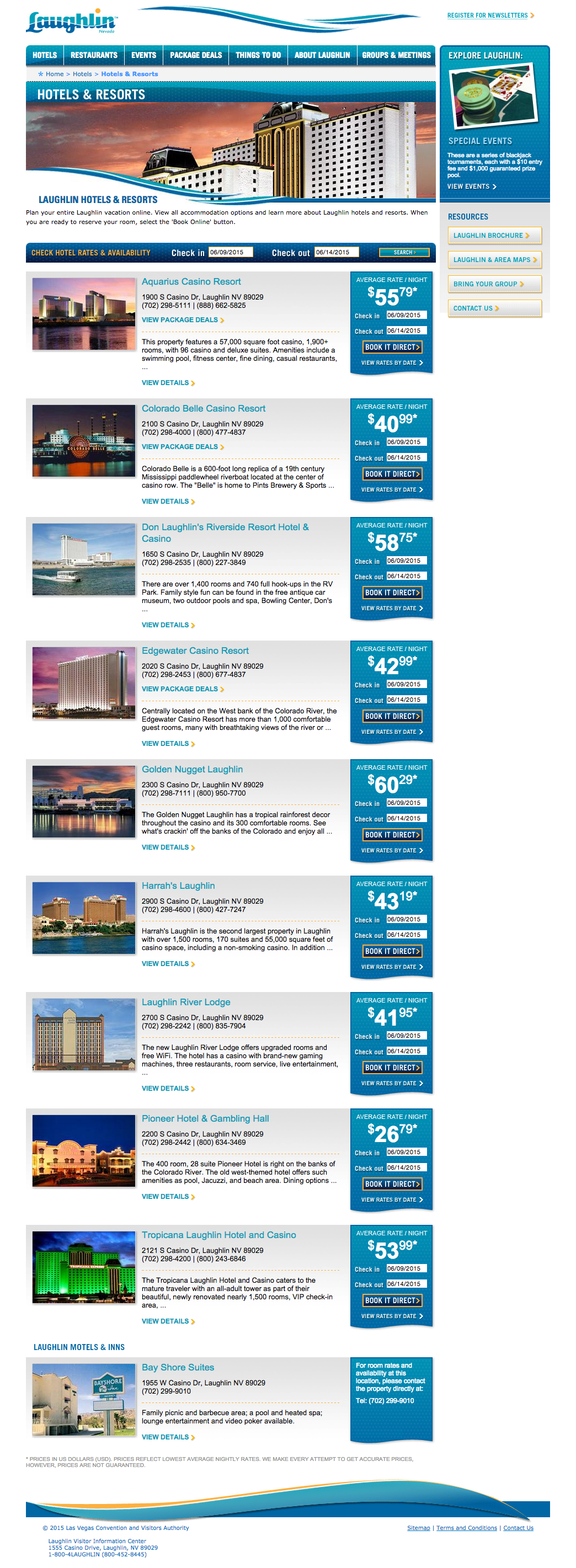
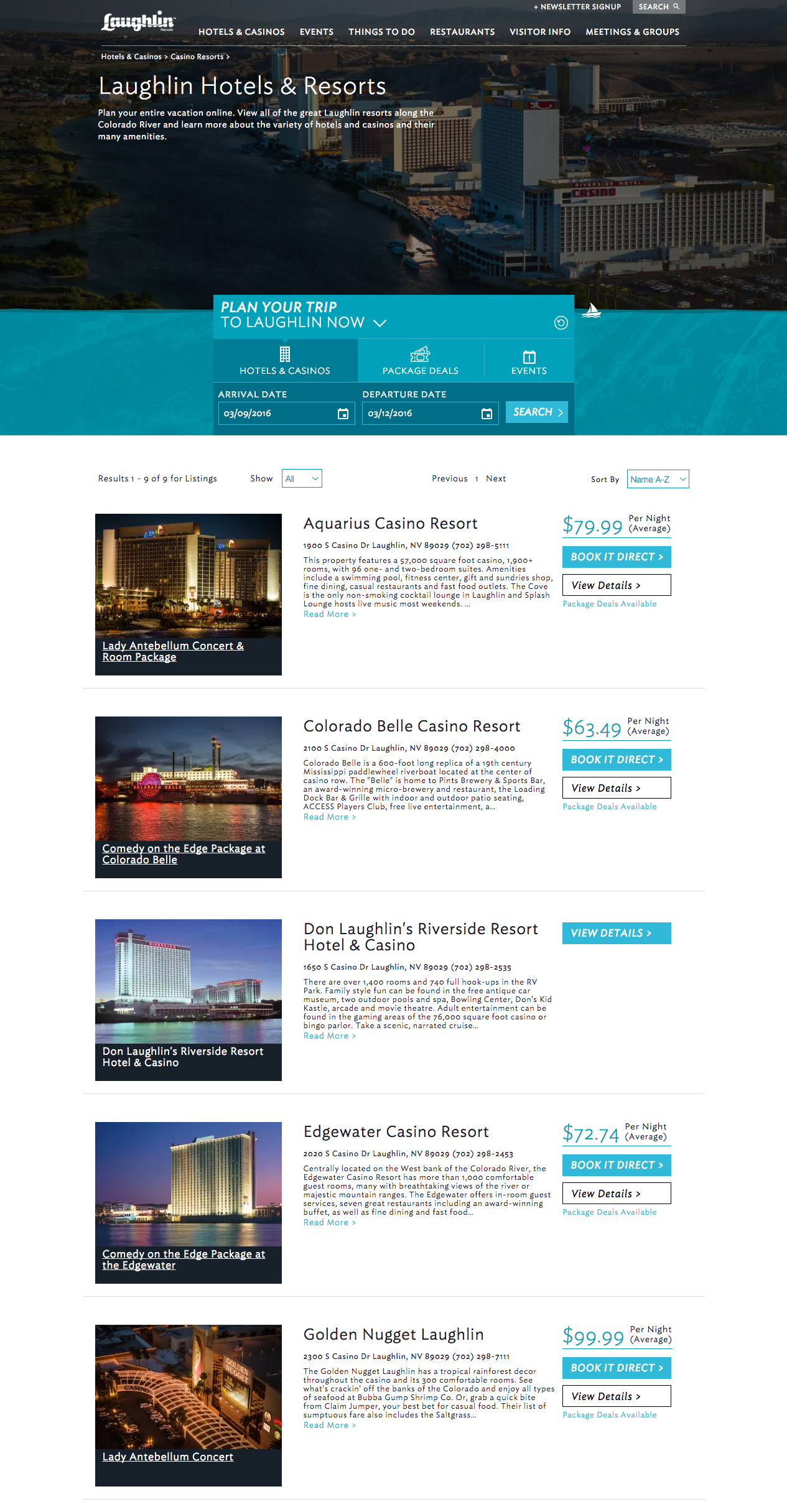
I was the sole designer end-to-end, covering IA, interaction design, and UI for both desktop and mobile. The most interesting challenge was calibrating how much to adapt versus how much to preserve from the established system, a judgment call that required understanding the audience difference clearly enough to defend every place where the Laughlin design diverged from the Las Vegas one.