
Overview
When Dell acquired EMC, it inherited an enterprise-leading monitoring platform in MyService360. The platform gave large organizations real-time visibility into the health and service history of their entire technology environment, from global data center infrastructure down to individual systems. The challenge was integrating it with Dell’s own enterprise intelligence and support portal into a single, unified experience that worked for users from both legacy platforms.
I was brought in as the original sole UX Architect on the project. The integration foundation I designed has continued to serve as the platform through subsequent iterations driven by customer feedback, user testing, and evolving business needs.
Dell MS360 Promo Video
The UX Process
The Integration Problem
The project started with a widely held assumption: the two portals were similar enough that combining them would be a relatively straightforward exercise. My initial audit revealed just how wrong that assumption was.
One portal had an information architecture roughly a quarter the size of the other. Functionality overlap between the two platforms was approximately 10%. These weren’t cosmetic differences. They reflected two fundamentally different product philosophies, user bases, and mental models for how enterprise IT professionals think about monitoring and support.
That finding reframed the entire project. This wasn’t a merger of two similar things. It was the design of a new unified product that had to serve both audiences without feeling like a compromise to either.
Information Architecture
Building an IA that worked for both user groups required more than intuition. I ran card sorting and tree testing with users from both legacy platforms to understand how each group organized and prioritized the same information differently. The goal was to find a structure that felt native to both, not one that asked either group to relearn a mental model they’d built over years.
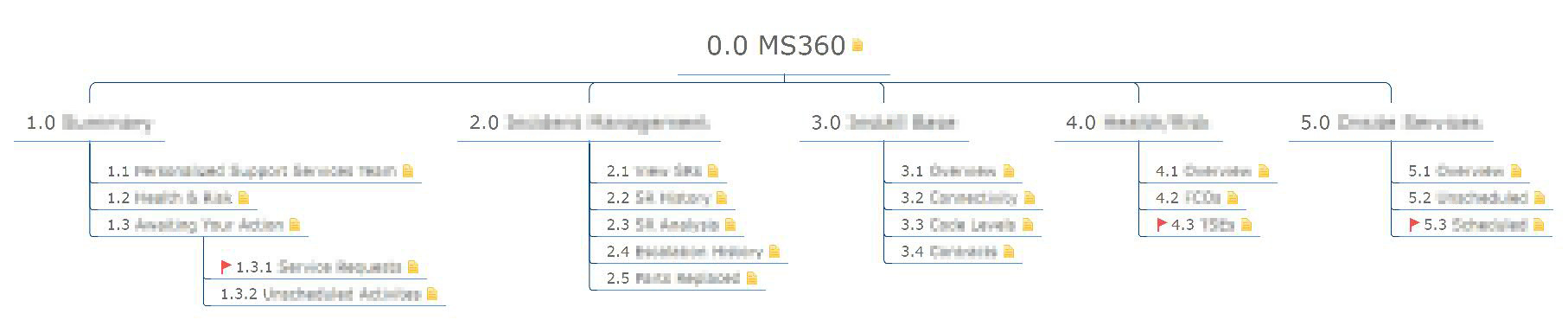
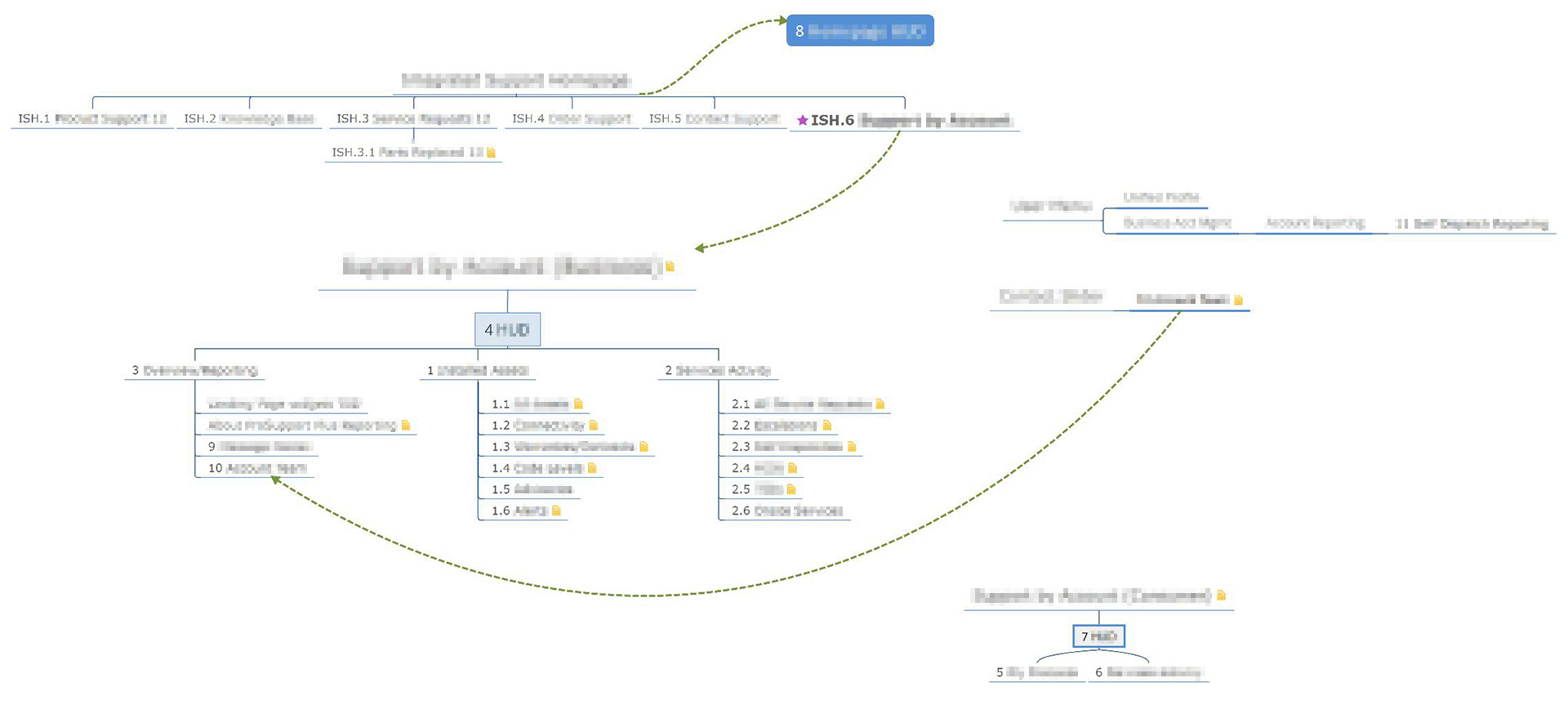
The resulting architecture consolidated two significantly different site structures into a single coherent system. The sitemaps shown here illustrate both the scale of the original gap and the degree of simplification the final structure achieved.
User Flows
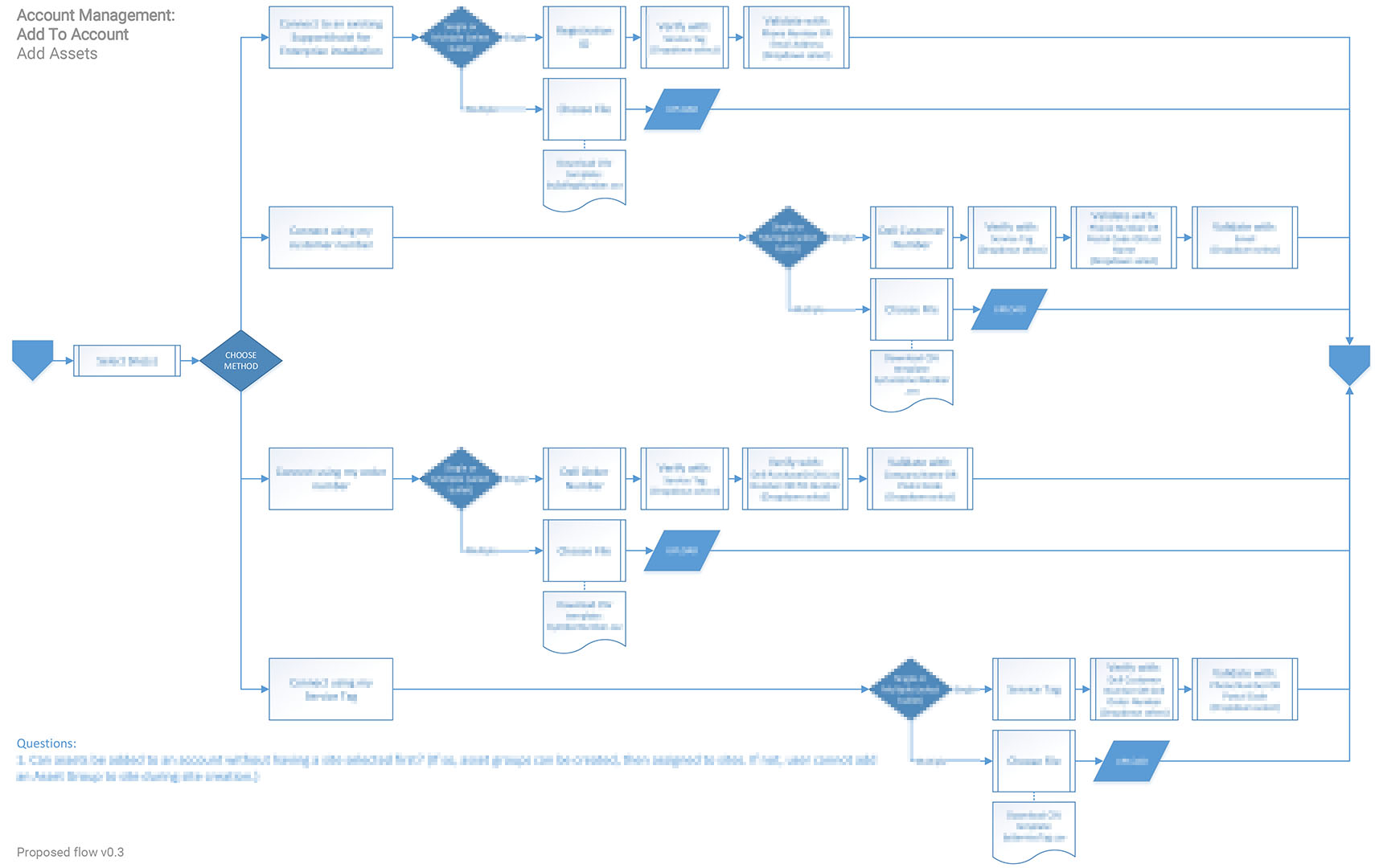
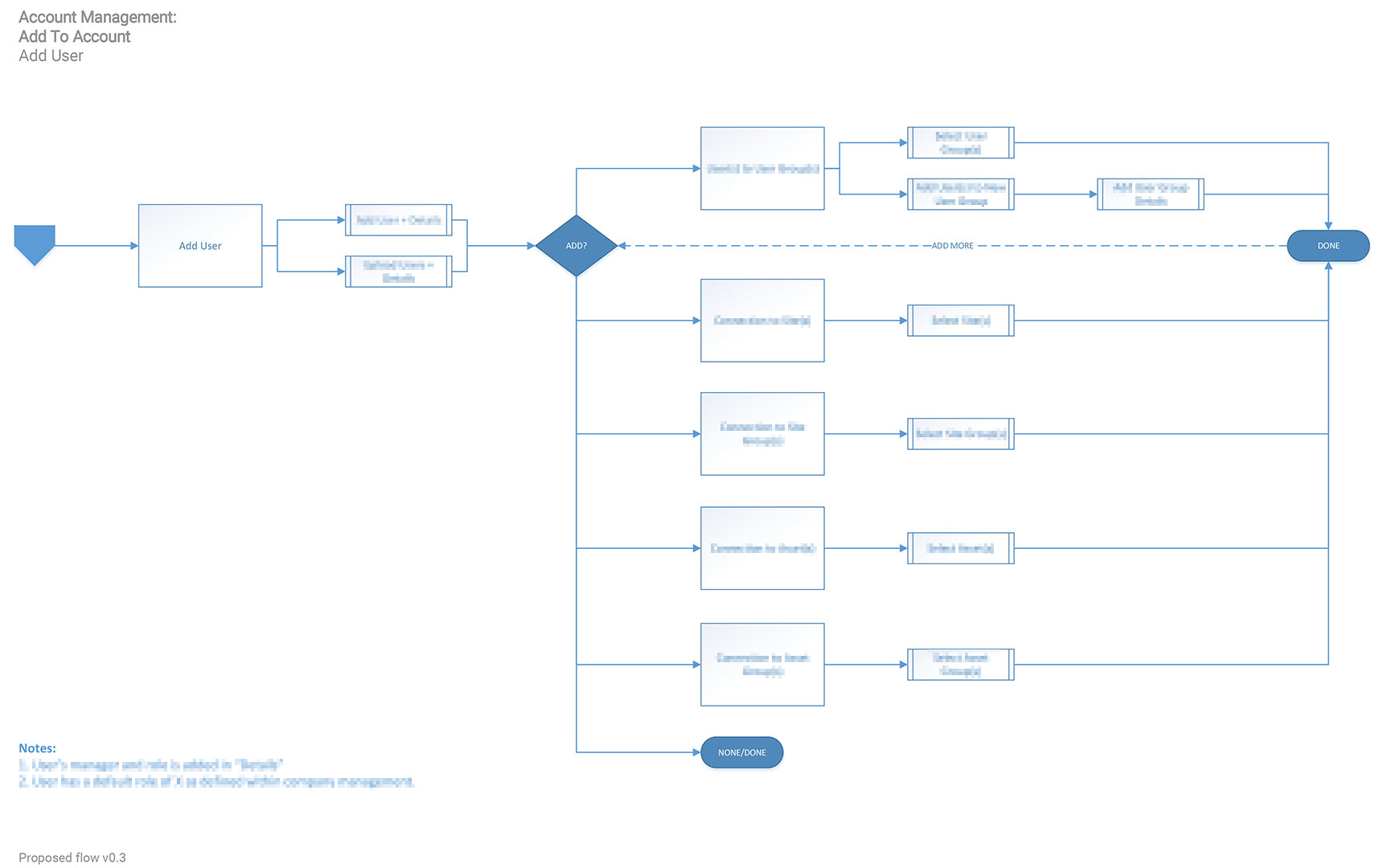
MyService360 supports a large and complex set of functions: asset management, user permissions, service history, diagnostics, environmental monitoring, and more. Each of those functions had existing flows in one or both legacy platforms that had to be mapped, reconciled, and redesigned into new unified flows.
I documented the current-state flows for each function across both systems, identified where they conflicted or diverged, and designed integrated flows that preserved the logic users depended on while eliminating the redundancy and inconsistency that came from two separate product histories. User validation was used throughout to confirm that the new flows held up under real-world usage patterns.
Content Strategy and Permission Modeling
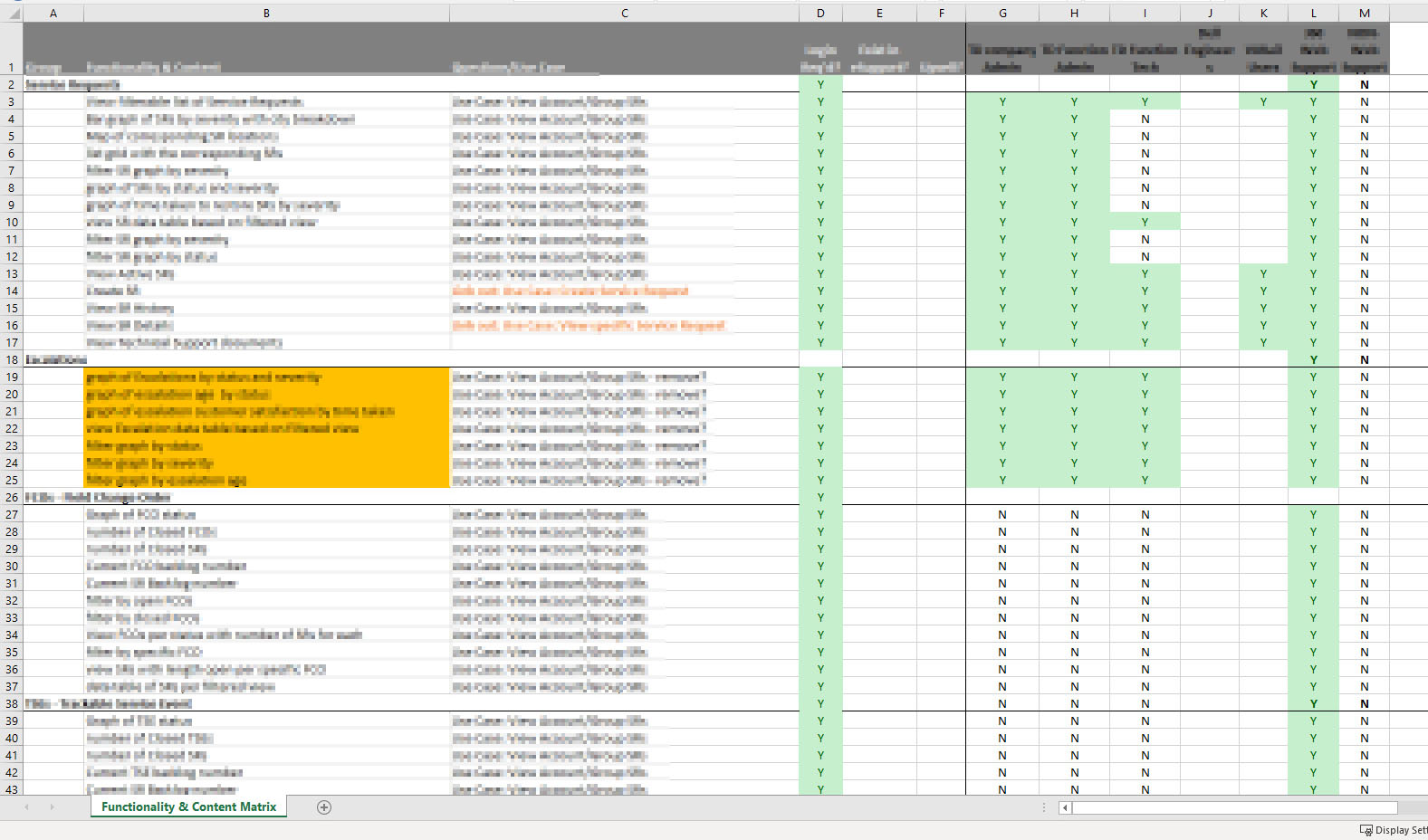
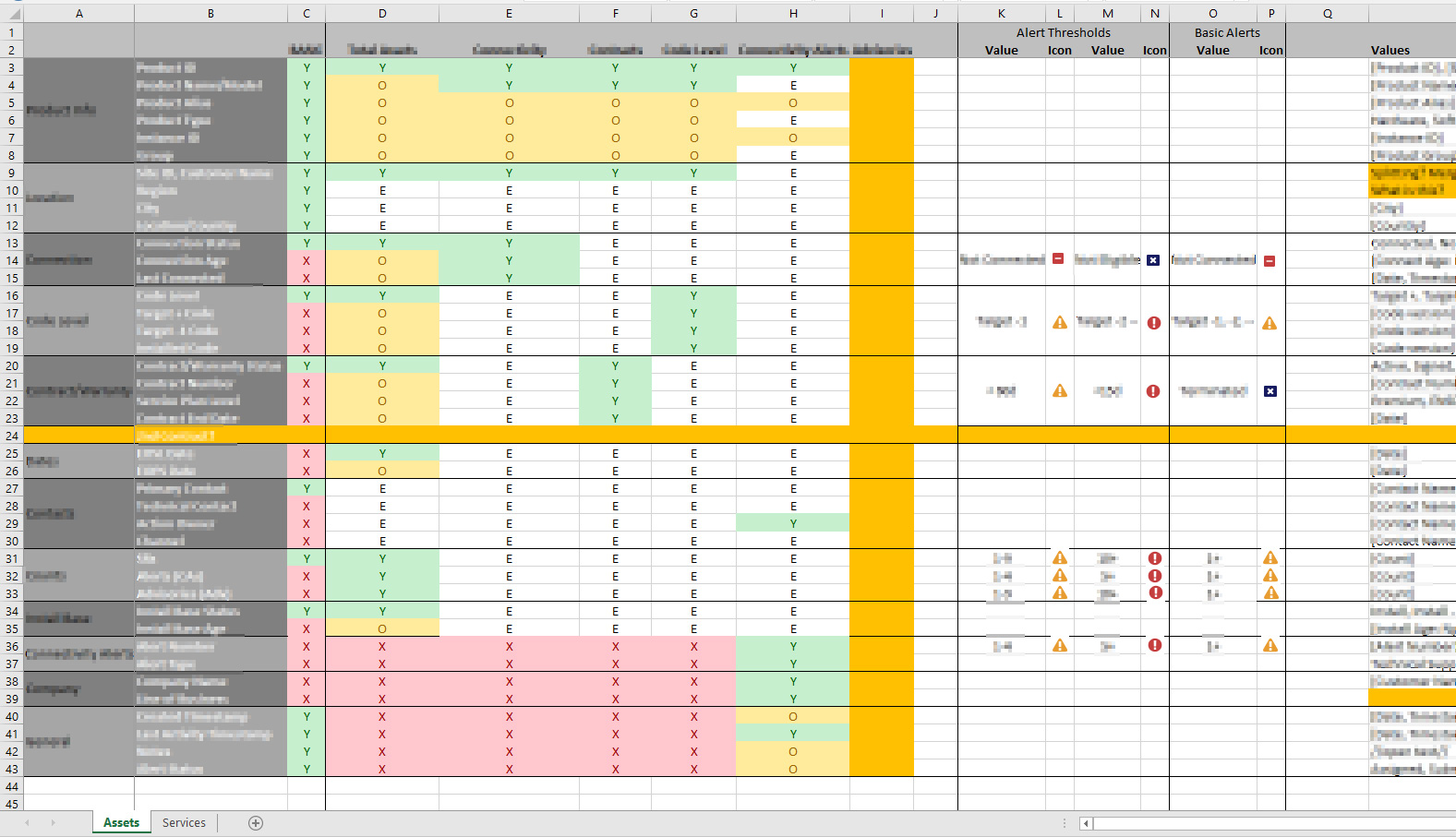
One of the most consequential pieces of work on this project was the content and functionality matrix. MyService360 serves users across multiple permission levels, and what any given user can see or do varies significantly depending on their role. Without a clear model for mapping content and functionality to user type, the design would have been ungovernable for both the team and the engineers building it.
I led the business owners of both legacy products and the new combined platform through a structured set of exercises to define and document those requirements. The resulting matrices became a foundational reference artifact that the team continued to use for years after the initial launch. That kind of longevity is usually a sign that the underlying logic was sound.
impact
%
97% of customers were able to easily gain visibility into the health of their global environment
%
43% time savings through aggregated views and actionable services data
%
73% faster issue avoidance and resolution through Secure Remote Services integration
These outcomes reflect what the platform was designed to do: give enterprise IT teams the signal they need to act, without requiring them to work across multiple disconnected systems to find it.
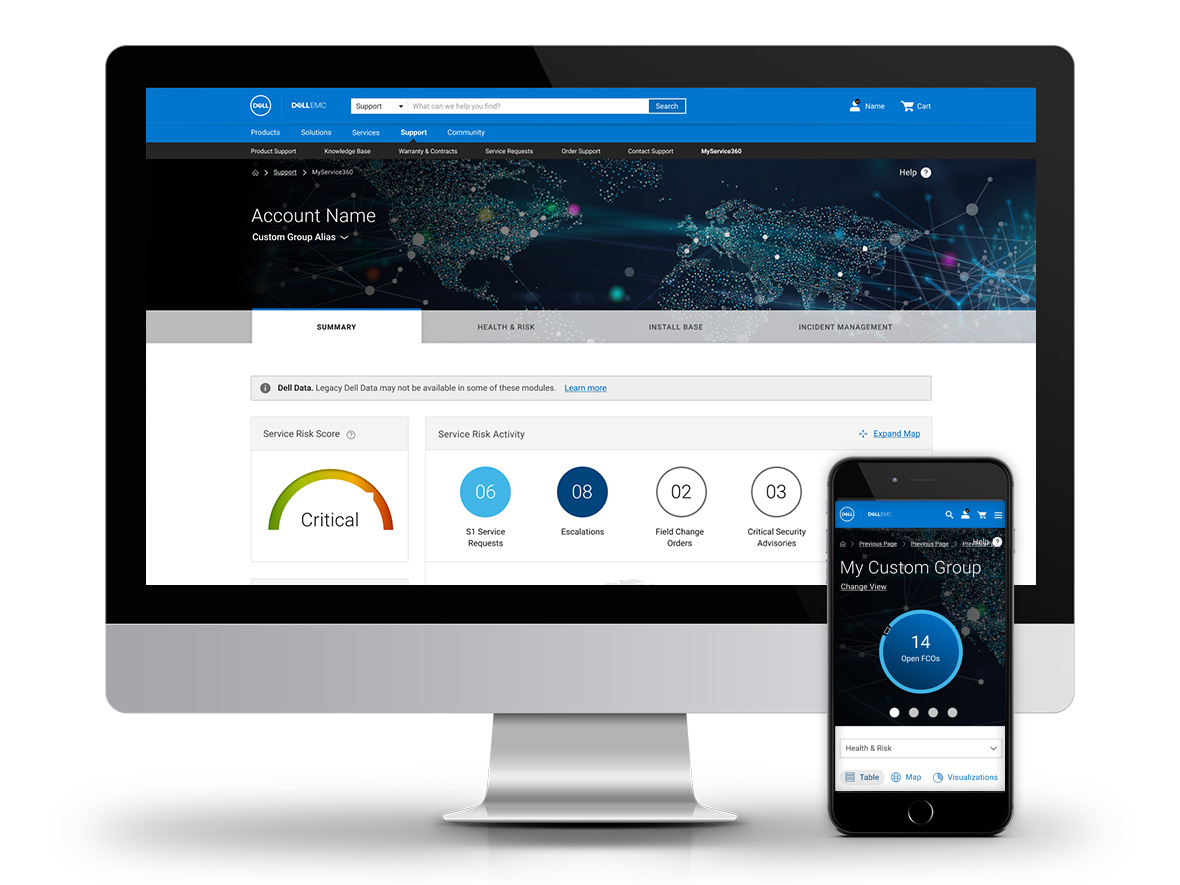
I was the original sole UX Architect on the project, responsible for every layer of the experience from initial audit and IA through user flows, interaction design, and UI. The most significant work happened before any screens were designed: the audit that surfaced the real scope of the problem, the content and permission modeling that made the design scalable, and the user research that kept the architecture grounded in how people actually worked.
The platform I designed continued to evolve after my initial engagement. That continuity is something I take seriously. Good foundational work should hold up long enough to be built on.